 |
|
|
|
|
|
|
New Cross
Speedway
|
| |
|
New Cross Stadium, Hornshay Street, Old Kent Road,
London. Operated between 1934-1963
|
|
|
|
|
|
New Cross
Speedway History
Tom Farndon
The
Spectacular George Newton
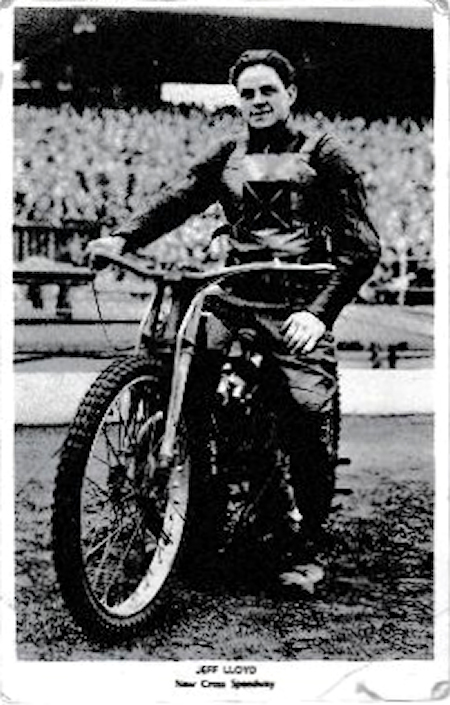
Jeff
Lloyd
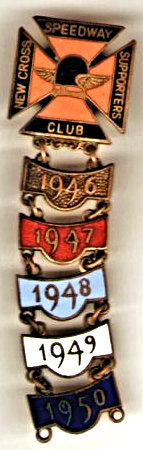
New Cross Badges |
|
Joyce Tinker's Photos etc
Joyce Tinker's letters etc
Sherri Joyce's Photos |
| |
| |
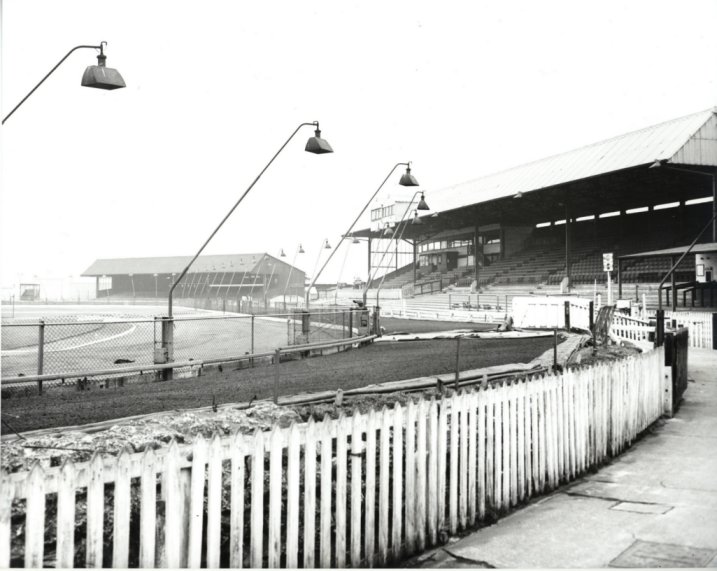
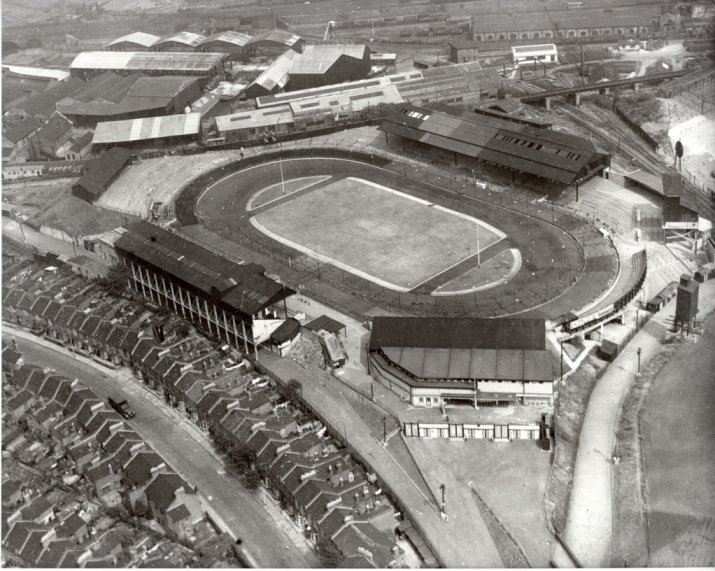
| New Cross
Stadium |
| |
 |
| |
 |
| |
|
The two photographs shown above are courtesy of Norman Jacobs. My
thanks to Norman, the photos are superb
|
| |
|
|
| |
| Two More Aerial Images |
| |
 |
| |
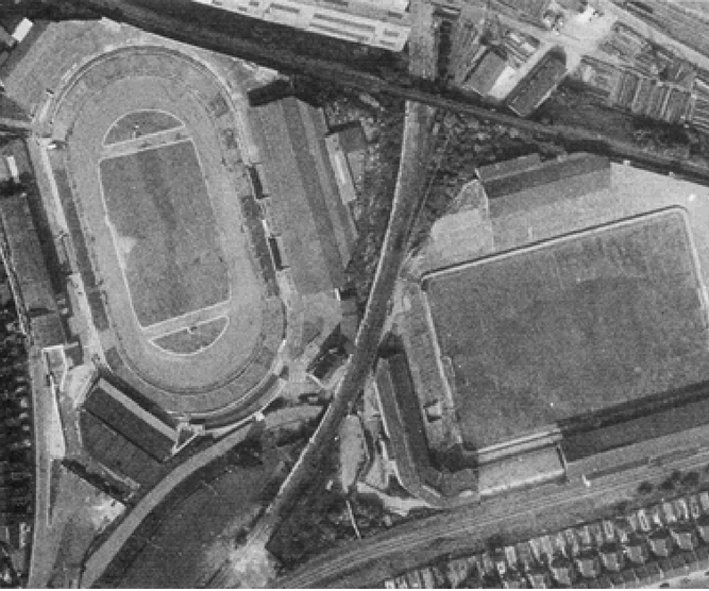
| Above: 1962 New Cross stadium, also showing the
old Millwall football ground. |
| |
 |
| |
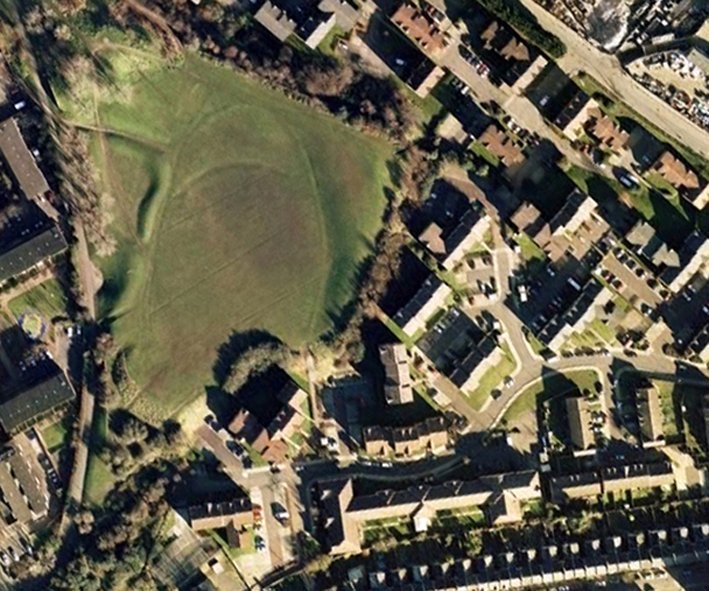
| Above: 2006 New Cross and the reason why
they will be no more speedway on this site. Hard to believe what
44 years can do. Tree lines now replace the rail lines, and houses
over the old Millwall football ground. |
| |
| |
|
| |
| London's Most Popular Track |
| |
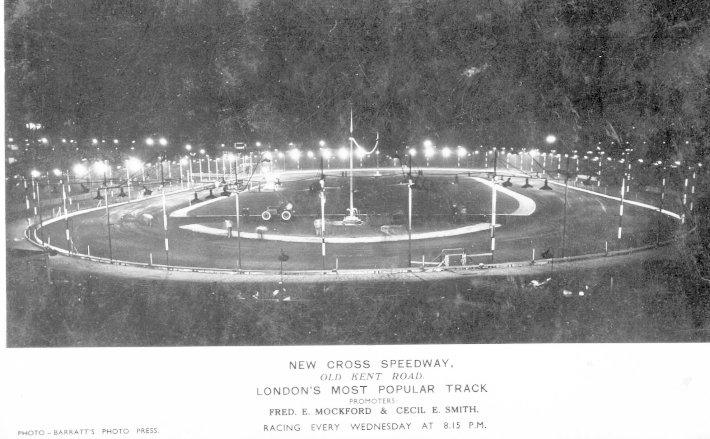 |
| Courtesy of Ken Bailey |
| |
| Ken lives in North Queensland Australia. His father, recently
deceased, was the speedway fan and the above picture was found in
his belongings. The New Cross track looks to be in
immaculate condition in this photo |
| |
|
| |
| |
|
Ken Bailey's Photo's
|
| |
|
Cordy
& Jack Milne
|
| |
 |
| |
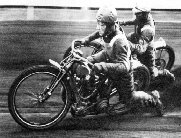
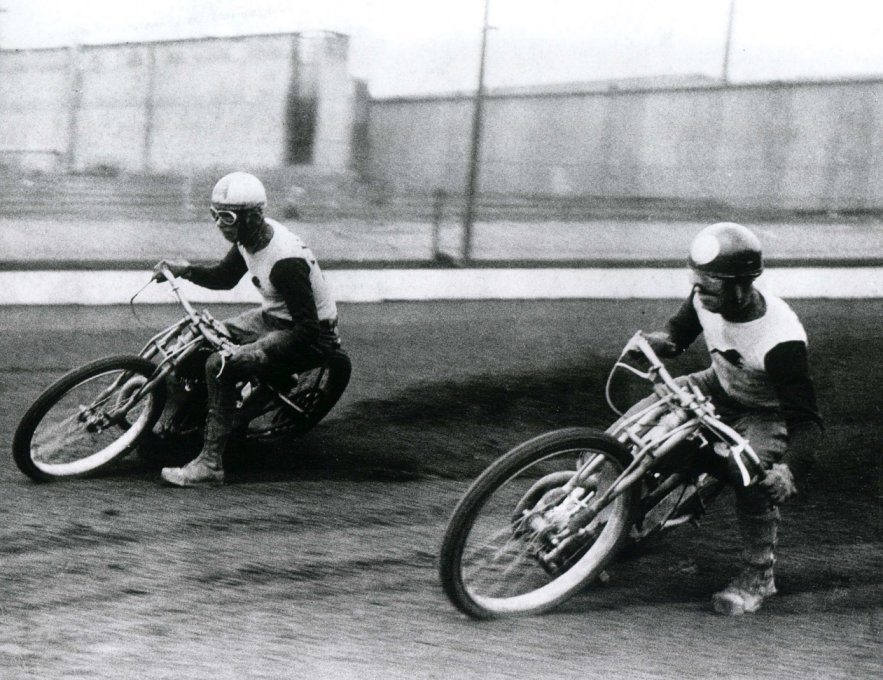
| The American Milne Brothers in action at New Cross. Cordy and Jack.
I don't know which is which! |
| |
| |
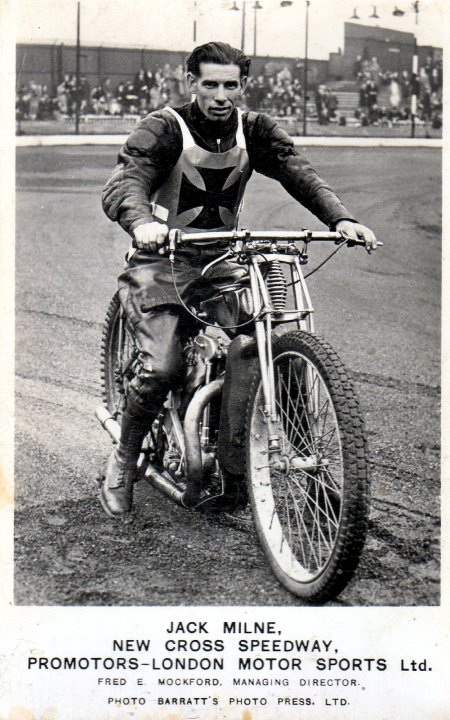
| Jack Milne |
| |
|
|
| Courtesy of Ken Bailey |
| |
| A fine photo of American Jack Milne.
His bike (JAP) looks brand new. I am looking
for a similar photo of his brother Cordy to complete this section.
If you have one please send me an image
John |
| |
| |
|
| |
| |
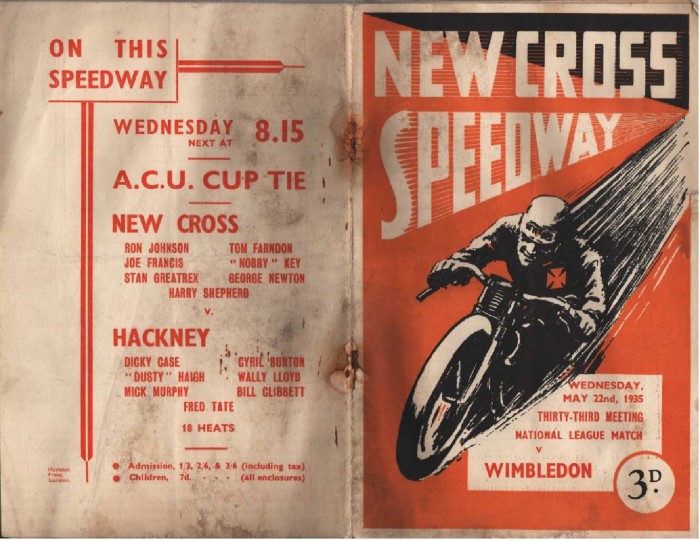
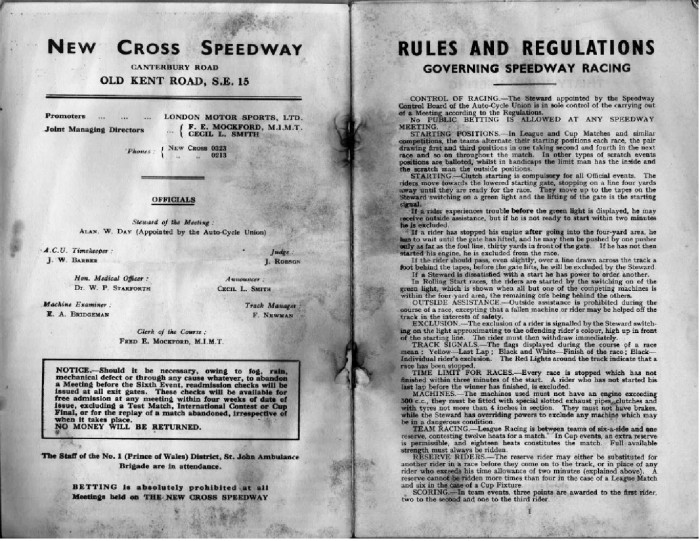
| New Cross v Wimbledon |
| |
| 22nd May 1935 |
| |
 |
| |
 |
| |
| |
|
| |
|
Sherri Joyce's Photos |
| |
Hi John, I recently found these old b/w pictures that my
dad had tucked away. He was a New Cross supporter back in
the day. Thought you may like them to put up on your
website. Don’t know what dates they are but they were
official issue
|
| John says: Sherri's photos follow below: - |
| |
| |
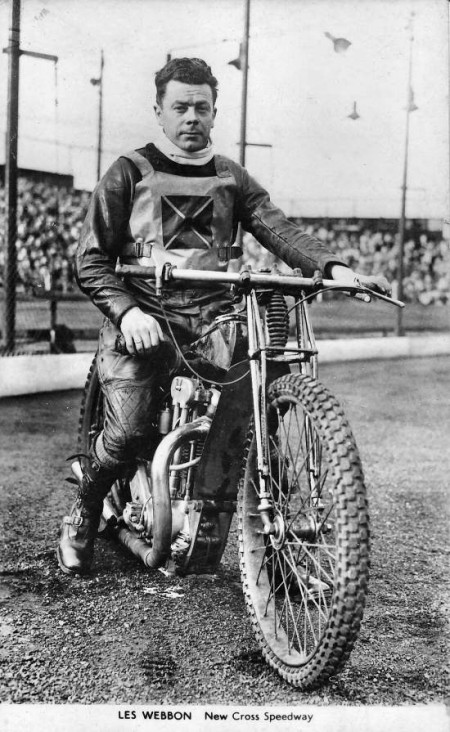
| Les Webbon |
| |
 |
| |
|
| |
| |
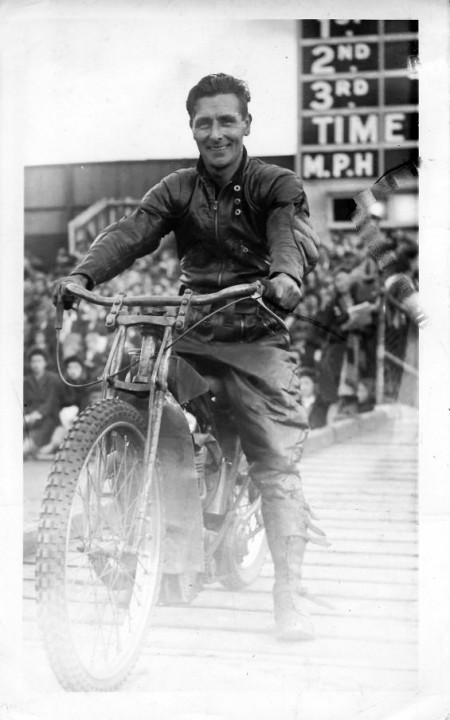
| Frank Hodgson |
| |
 |
| |
|
John Hyam
says: Of further note in the New Cross section: photos of
Frank Hodgson and Malcolm Craven.I am certain neither rode for
New Cross.
Pre-war
Hodgson rode for Hackney Wick. Post war at Middlesbrough and
(????) Ashfield.
Malcolm Craven
pre-WW2 rode for Wembley (on loan for a time at Birmingham).
Post-war at West Ham.
regards,
John.
|
| |
|
| |
| |
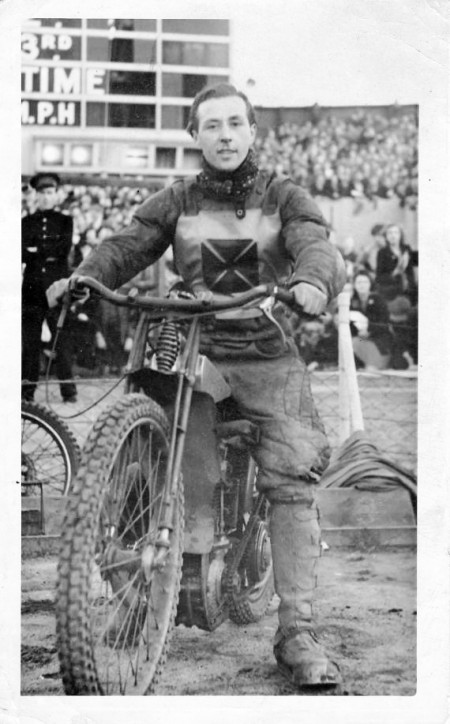
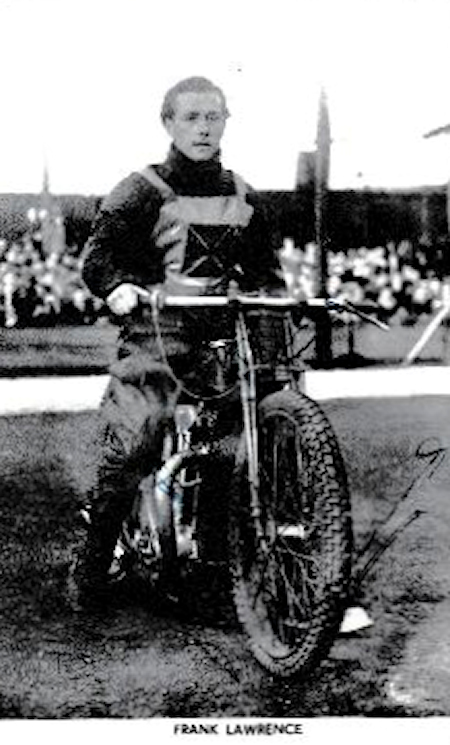
| Frank
Lawrence |
| |
 |
| |
|
| |
| |
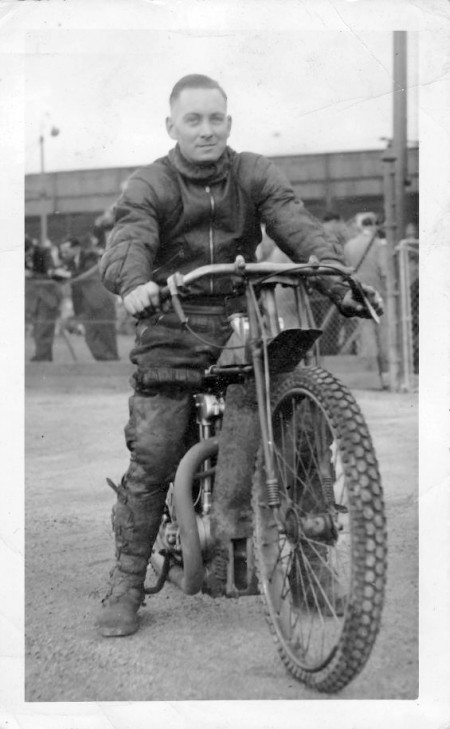
| Malcolm Craven |
| |
 |
| |
|
John Hyam
says: Of further note in the New Cross section: photos of
Frank Hodgson and Malcolm Craven.I am certain neither rode for
New Cross.
Pre-war
Hodgson rode for Hackney Wick. Post war at Middlesbrough and
(????) Ashfield.
Malcolm Craven
pre-WW2 rode for Wembley (on loan for a time at Birmingham).
Post-war at West Ham.
regards,
John.
|
| |
| |
|
| |
|
Joyce Tinker's Photographs |
| |
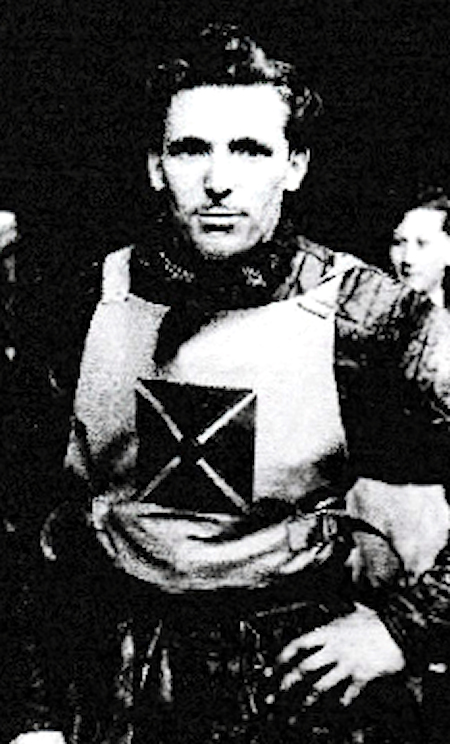
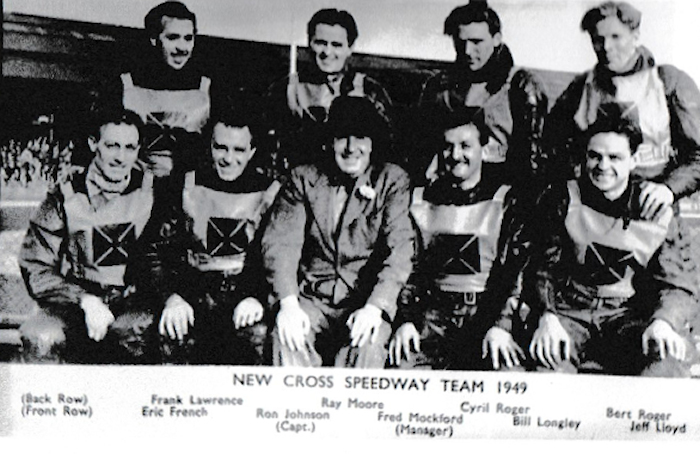
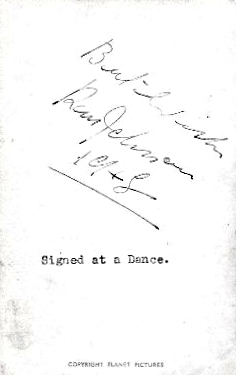
| Tim
Martin says: Joyce Tinker née Benham
is an interesting lady. Born in 1931, she lived in New Cross with
her cousin who is one of the other names signing the letters. She
was introduced to speedway by an aunt and cousin and used to
attend regularly on Wednesday evenings after the war. Her records
seem to start in 1947 and so I suspect that is when she started to
attend. She joined the army in what sounds like early 1950 and
her contact with the sport seemed to end there. She speaks about
attending away races and cadging lifts back on the lorry which
transported the bikes. She seemed to know some of the riders and
mentioned that she was friendly with two young riders who rode for
West Ham (names unknown). She said they attended functions with
them from time to time. I wonder if this is why some of the
photos are signed and noted by Joyce as "at a dance" Joyce is now
89, living a few towns away from New Cross. |
| |
| |
| |
| |
 |
| Courtesy of Joyce Tinker |
| |
| |
 |
| Courtesy of Joyce Tinker |
| |
 |
| |
 |
| Courtesy of Joyce Tinker |
| |
 |
| Courtesy of Joyce Tinker |
| |
 |
| Courtesy of Joyce Tinker |
| |
 |
| Courtesy of Joyce Tinker |
| |
 |
| Courtesy of Joyce Tinker |
| nc8 |
 |
| Courtesy of Joyce Tinker |
| |
 |
| Courtesy of Joyce Tinker |
| |
 |
| Courtesy of Joyce Tinker |
| |
 |
| Courtesy of Joyce Tinker |
| |
 |
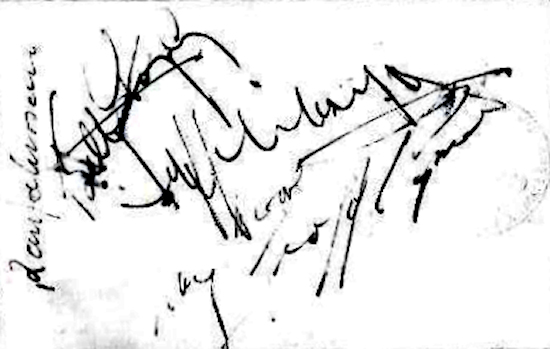 |
| Courtesy of Joyce Tinker |
| |
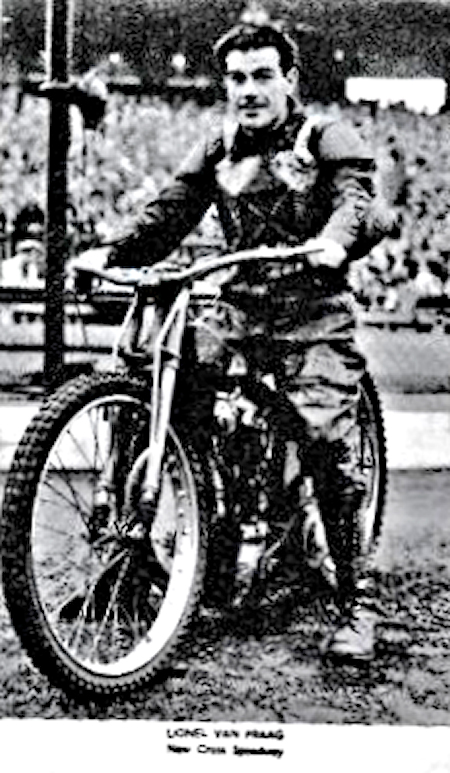 |
| Courtesy of Joyce Tinker |
| |
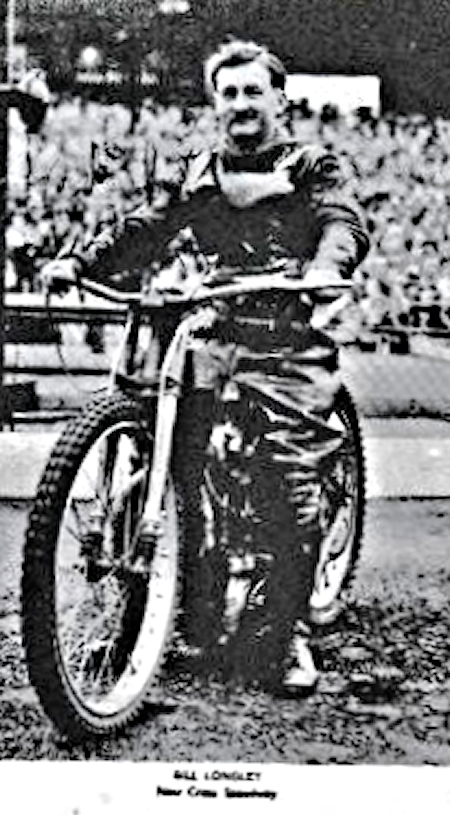 |
| Courtesy of Joyce Tinker |
| |
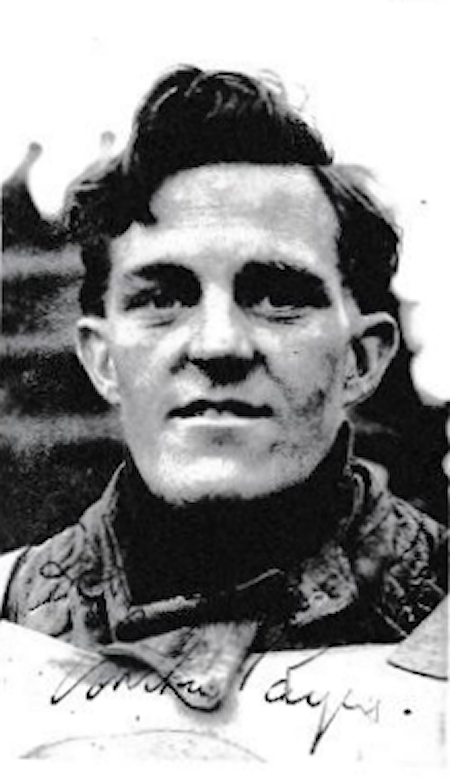 |
| Courtesy of Joyce Tinker |
| |
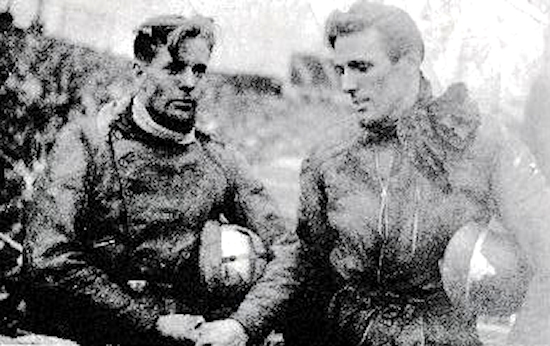 |
| Courtesy of Joyce Tinker |
| |
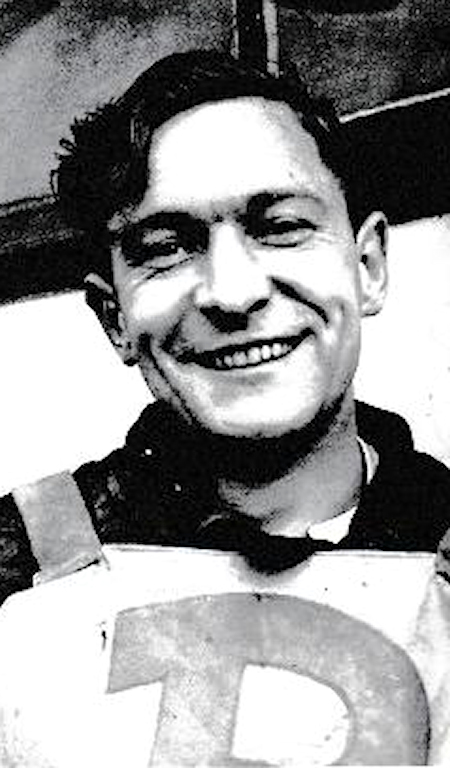 |
| Courtesy of Joyce Tinker |
| |
| Charlie May Birmingham |
| |
|
| |
| |
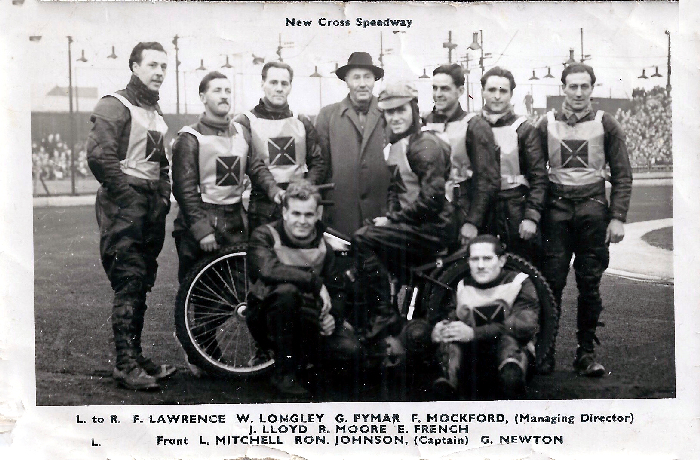
| New Cross
1948 |
| |
 |
|
|
Max Ayriss says: Just the other day I found this in my
Auntie’s tin of photos. Her husband was a Londoner
and so the link. From my research I think it was
about 1958, but I am sure you could pinpint the season.
Please publish freely
Best wishes Max
|
|
John says: I think 1948 but let me know if it isn't 1948
John |
|
|
| |
|
| |
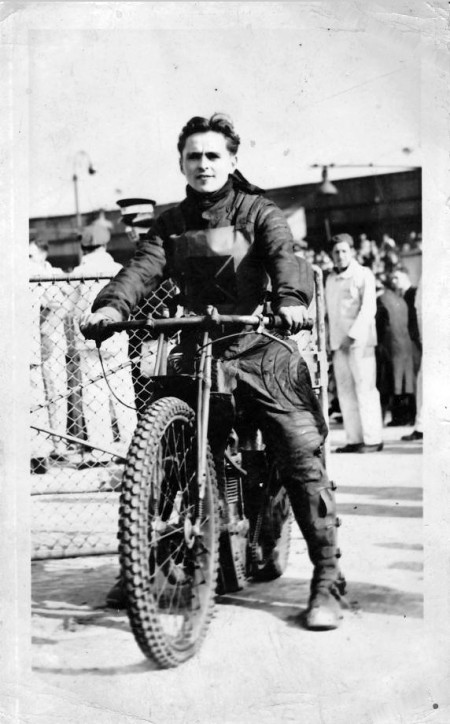
| Ray Moore |
| |
 |
| |
| John says: My thanks to Sherri Joyce for
sending the 5 photos shown above. British Speedway needs
successful tracks around the London area. The London
catchment area is massive so hopefully a promoter will come along
and re-introduce the sport in an area like New Cross/West
Ham/Wimbledon etc. |
| |
| |
|
| |
| Fred Pallett's Photos |
| |
 |
| |
 |
| |
|
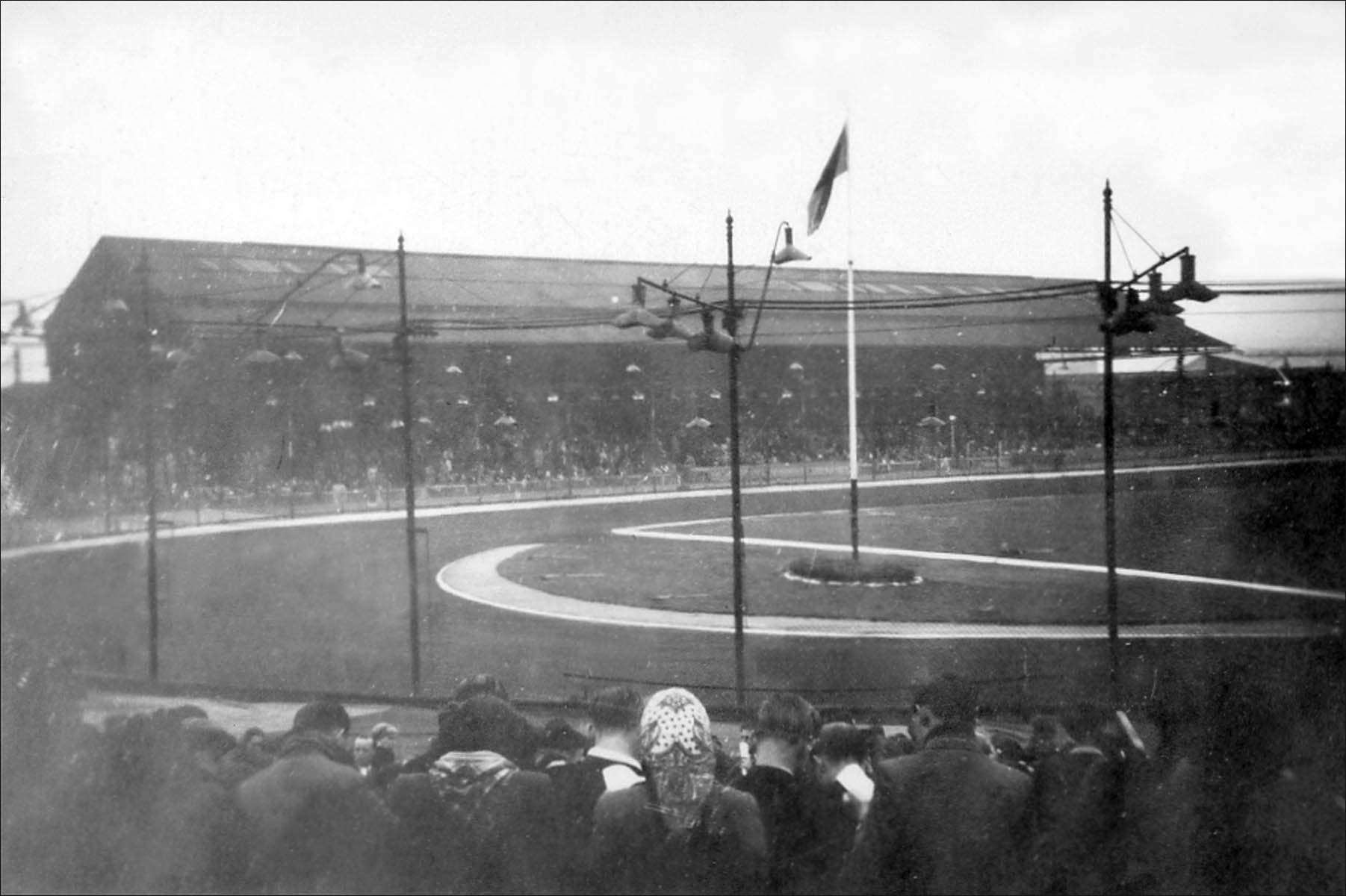
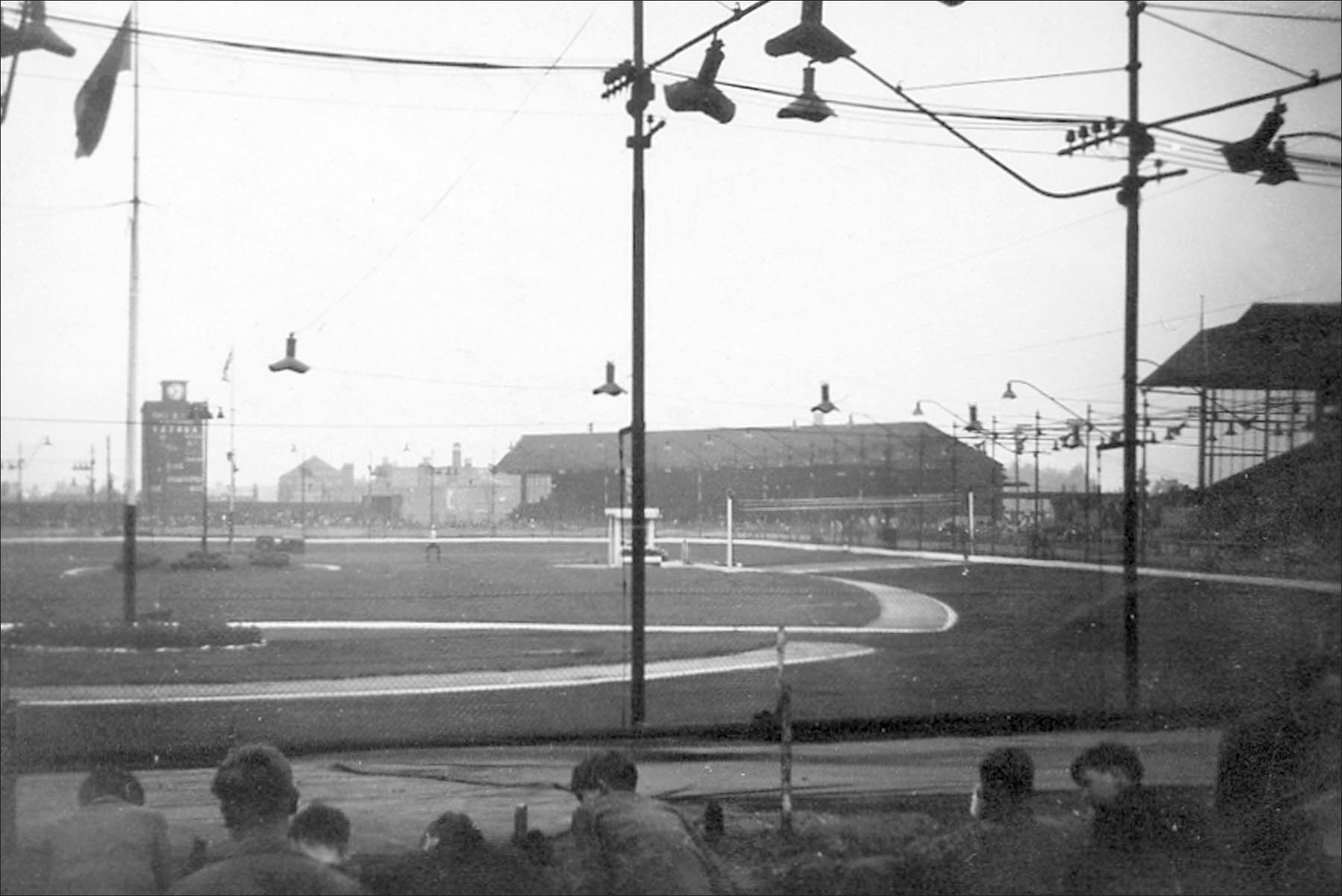
John says:
These 2 photos shown above are courtesy of Fred Pallett. This page
has a number of images of New Cross Stadium. It was an immaculate
stadium for our sport.
|
| |
|
|
|
| |
| New Cross Rangers |
| |
| Promoters London Motor Sports Ltd: F.E.
Mockford Managing Director |
| |
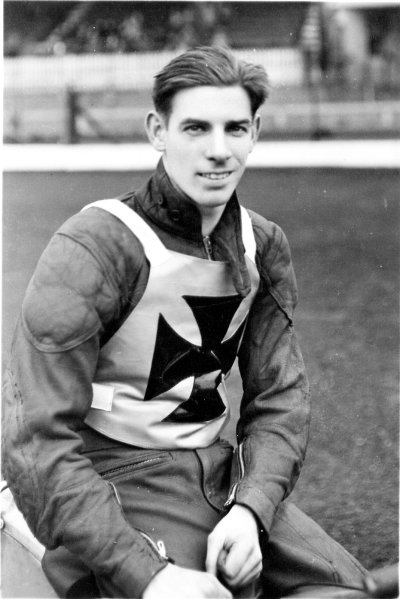
| Jack Milne |
| |
 |
|
|
|
| |
| |
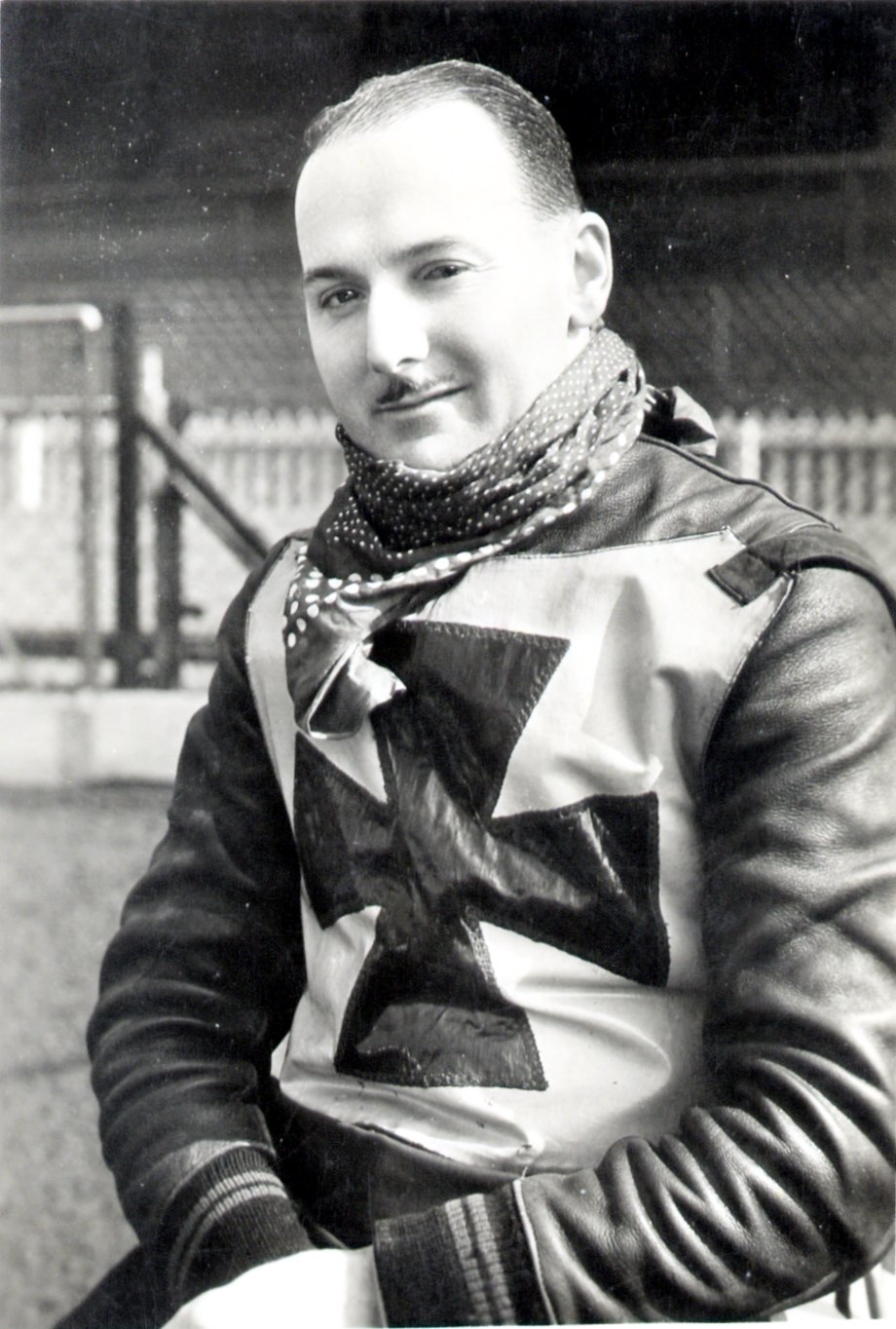
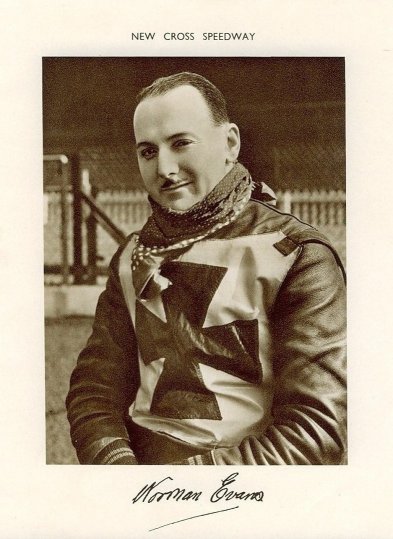
| Norman Evans
1936 |
| |
 |
| |
| |
|
| |
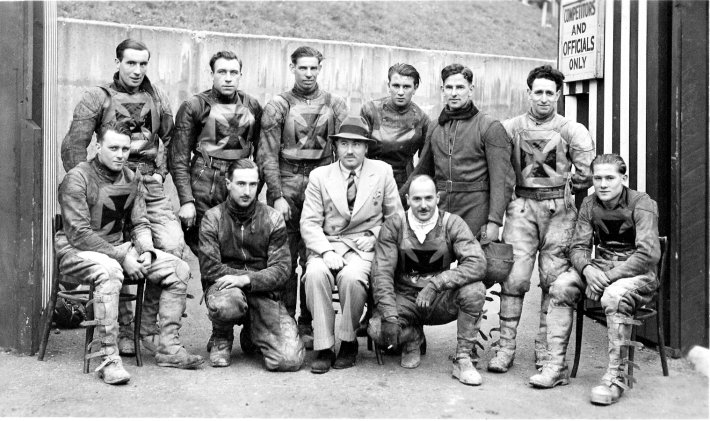
| New Cross Team 1930's |
| |
 |
| |
| Back Row Stan Greatrex, Nobby
Key, Jack Milne, Harry Collins, Ernie Evans, Harry
Shepherd, Front Row Ron Johnson, Mike Erskine, Fred
Mockford, Norman Evans, George Newton. Every action
photo I have seen of George Newton has been spectacular.
Pity I was too young to have seen him on track |
| |
| |
|
| |
| |
| Doris Lewis' Memories |
| |
| Doris Lewis aged 88 (as at 2014) says: Hi
John, I have just discovered your super web site on New Cross
Speedway. I was a nine year old girl when I became a supporter of
the wonderful New Cross club in 1936. |
| |
| Seeing your photos of Ron Johnson, Jack
Milne, Stan Greatrex and many others plus pictures of the track
and stands has brought back so many memories for me. For a while I
relived the excitement of getting ready on a Wednesday evening to
meet my three cousins and going off to our beloved stadium and
idols. |
| |
| Dressed in our orange and black scarves
and hats, the long walk or sometimes bad weather never seemed to
bother us. We always stood under the stand, on the first bend of
the track, and couldn't wait to hear the roar of the bikes revving
up and then the line ups at the starting gate. What joy! |
| |
| Seeing all that again on your excellent
web site took me from an 87 year old woman to that 9 year old
child. Thank you. |
 |
| |
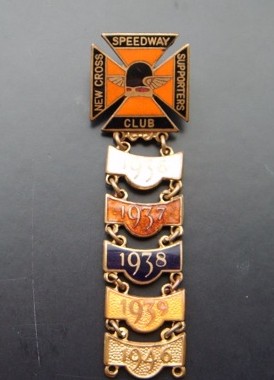
| Doris says: I have sent you a photo of my
treasured badge. 1936 - 1939 and my final year 1946 |
| |
| |
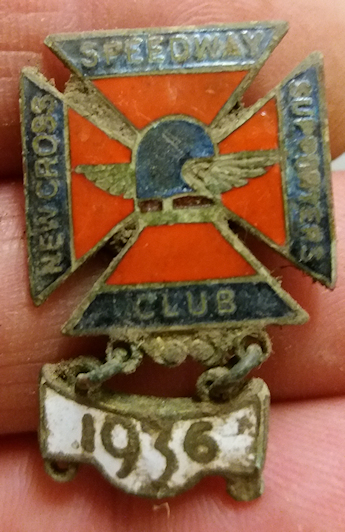
| 1936 Badge |
| |
| Found by Metal Detectorist |
| |
 |
| |
Hello my family lived in Amersham Vale
1929-1944 and visited the speedway many times
☺ they survived the V1 bombing of Woolworths
and survived the blitz ☺ I'm a metal
DETECTORIST and found this beautiful enamalled
badge. Just thought i'd share it with you.
Great site you have, keep up the good work and
stay safe.
|
| |
| |
|
| |
| |
|
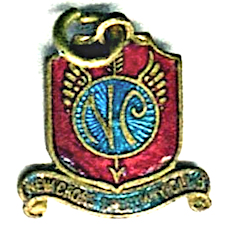
New Cross Badges |
| |
| Doris Lewis' badge shown above
is a badge that will take some beating. The badge is from
the Art Deco period which makes it even more collectable.
However on with the other badges which follow below: - |
| |
 |
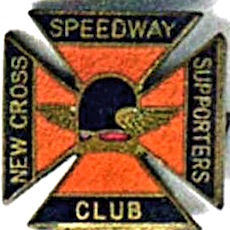 |
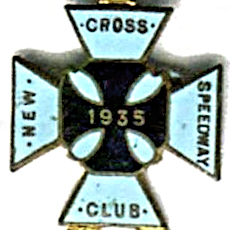 |
| 1930 (I Think) |
1934 |
1935 |
| |
|
|
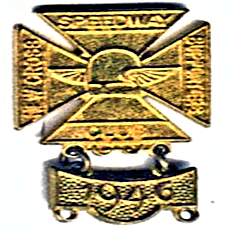 |
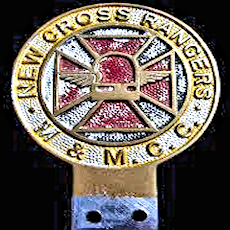
|
 |
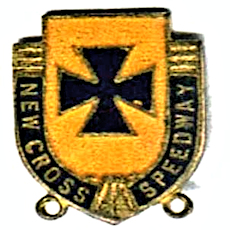 |
| 1946 & 1960 |
Car Badge |
| |
|
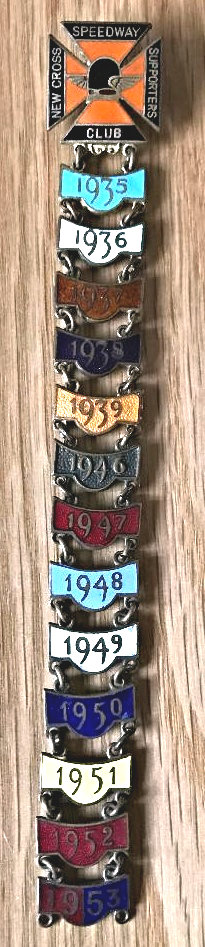 |
Left: Niall Strudwick says: New Cross badge with every
year in action under the Fred Mockfold promotion (my personal
favourite badge that I own)
John
says: New Cross get my vote for speedways best badges
|
| |
|
|
| |
| |
|
| |
| |
| New Cross Speedway
History |
| |
| By John Hyam |
| |
|
John Hyam says:
Speedway
racing ‘down the Old Kent Road’ in south
east London is just a long distant memory. |
| |
| New Cross Stadium is now parkland. But for thousands of ‘Wednesday
nighters’, great names like Ron Johnson, George Newton, Jack Milne
and Tommy Farndon still roared round the 262-yard speedway, one of
the smallest tracks to built in Britain. |
| |
|
Speedway racing came to New Cross Stadium as backing for greyhound
racing, and it proved an ‘ideal sporting marriage’ to help the
arena pay its way. |
| |
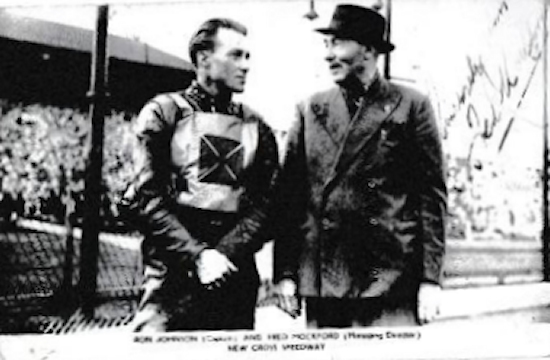
| The bikes roared into action at New Cross on April 18, 1934, when
promoter Fred Mockford moved the Crystal Palace team into the new
stadium at Hornshay Street, just off the Old Kent Road. New Cross
beat West Ham 32-21 in a National League match before 15,000 fans. |
| |
| That same year, Mockford also introduced the starting gate. Harry
Shepherd and his mechanic Alf Smith played a big part in the
development which replaced flag starting. |
| |
| Shepherd had good local connections. For years he was a partner in
a building firm at Loampit Vale, Lewisham, with team-mate Triss
Sharp. Another local was Joe Francis, like Shepherd and Sharp, a
pioneer member of the New Cross Rangers. He was a motorcycle
dealer at Eltham, less than 10 miles from the track. |
| |
|
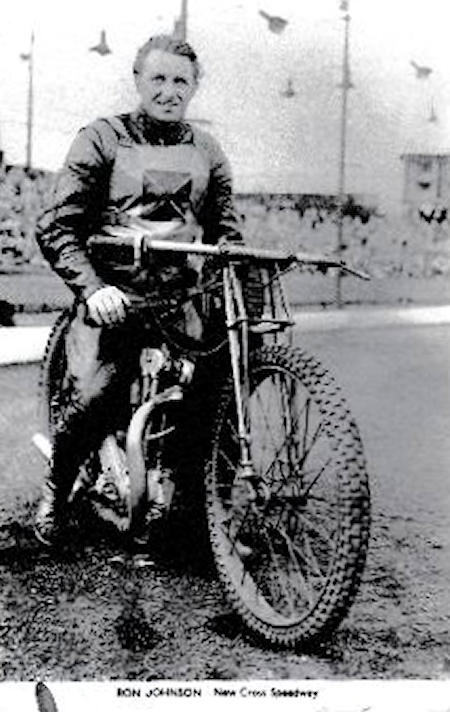
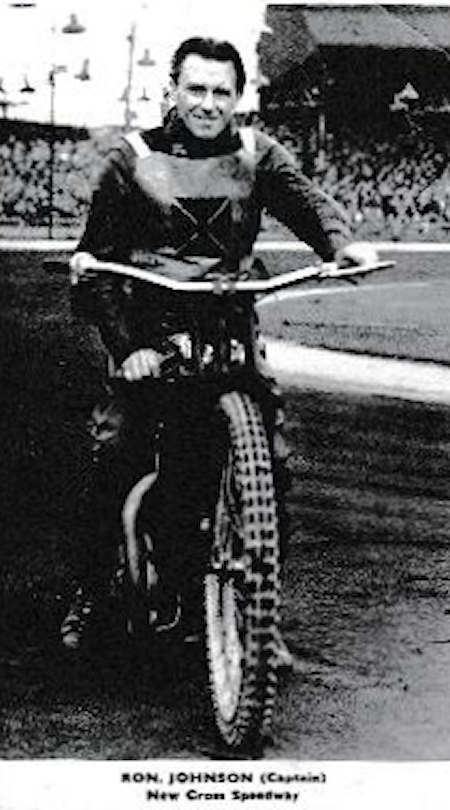
Australian rider Ron Johnson, who lost the tops of two fingers on
his right hand at Crystal Palace when he bent down to adjust a
clip on his bike’s primary chain, was one of the top men until
well into the 1940s. |
| |
|
Losing parts of the hand did not worry the old-timers. American
ace Jack Milne lost his right thumb in a track accident in 1937,
and while in hospital practiced a new-style throttle control on
his hospital bed rail. |
| |
| He came out and carried on the season in brilliant form, ending
the season as world champion. He took the crown from the
Australian rider Lionel van Praag, who was then with Wembley. |
| |
| Ten years later, after the closedown of the 1939-45 World War Two
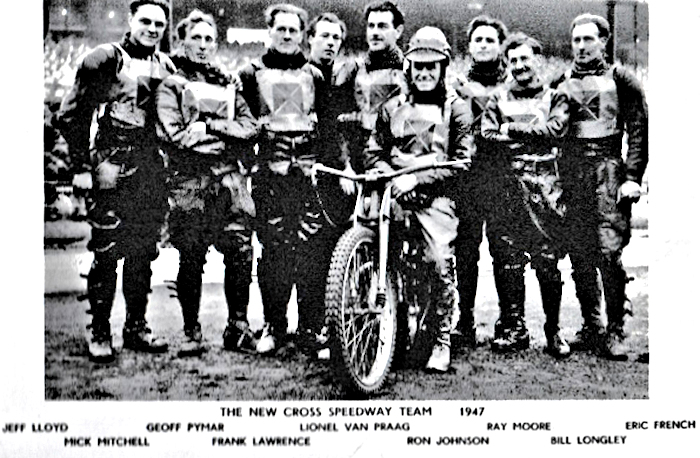
years for speedway, Praag rode for New Cross in the 1947 season. A
qualified pilot, he served with the Australian air force in the
war and was awarded the British Empire Medal. He rescued one of
his crew from the shark-infested Tinor Sea after their plane had
been shot down by a Japanese fighter. |
| |
| The big pre-war hero was Tommy Farndon, hailed as England’s best
rider at the time, an opinion still endorsed by many today. |
| |
| Farndon was the only rider to die after an accident at New Cross.
It happene in 1935, during an unimportant second-half race, after
Farndon had raced unbeaten in the preceding league match.
Farndon’s machine locked with close rival Ron Johnson’s bike as
they went in to the pits bend. He was thrown in to the safety
fence and taken unconcious to the Miller General Hospital at
Greenwich. |
| |
| Crowds waited for days outside the hospital for news of Farndon’s
condition, and when it was announced that he had died, many fell
to their knees, crying in an guish. For years after that,
Farndon’s memory was kept alive by a trophy named after him, |
| |
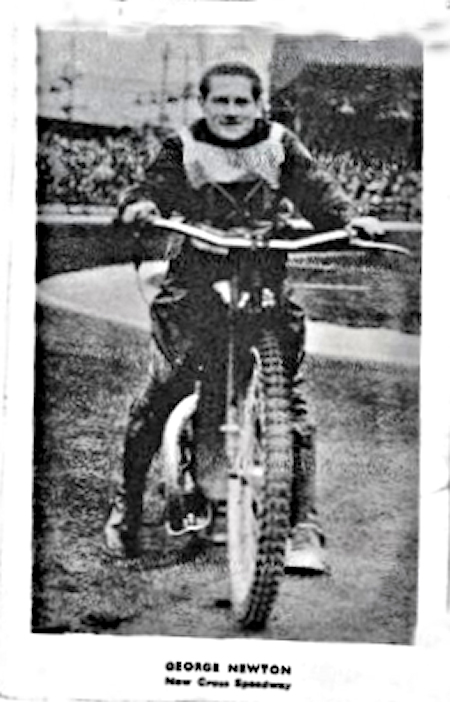
| Farndon was one of many English riders at the track who gained
international honours. Another was the wildly spectacular George
Newton who, like Farndon, was a legtrailer. |
| |
|
Newton’s best pre-war season was 1938, when he set a track record
of 58 seconds that stood for 10 years. But, at the end of 1938,
Newton was forced to retire because of a lung infection.
|
| |
|
In 1948, Newton made a come-back, minus one lung. His first
meeting proved a disaster, He fell in all five races, twice on the
starting gate. But he persisted and by mid-season was hitting big
scores until he was rushed to hospital with peritonitis. In 1949,
he came back for a few meetings, then went into the Second
Division and rode until the end of 1953. |
| |
|
The 1938 season was New Cross’ best pre-war effort, when they won
the National League First Division title by five points from West
Ham. Ten years later they had their only other season as champions
when they finished two points ahead of a Vic Duggan-inspired
Harringay. |
| |
|
Like most tracks, New Cross closed in September 1939 when World
War Two started, and were among the first to reopen in 1945. They
ran a series of open meetings before the league started in 1946. |
| |
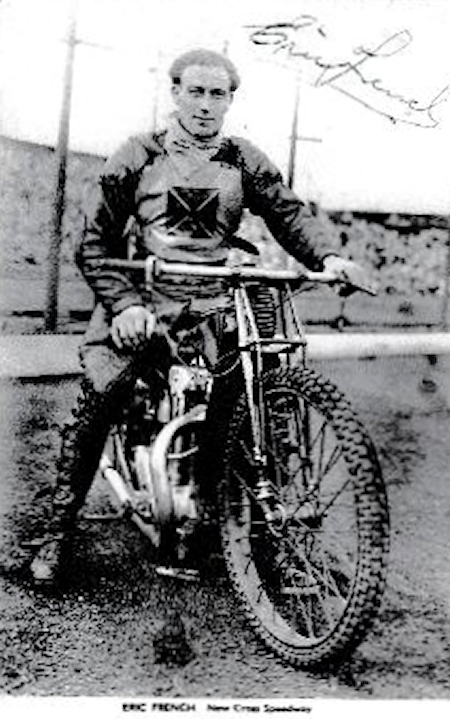
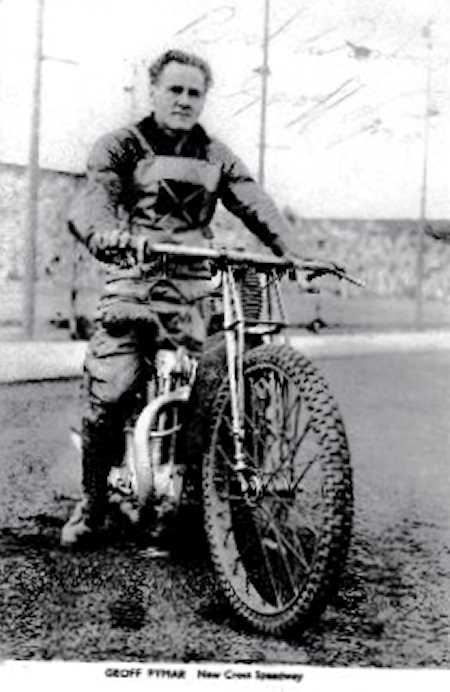
| Ron Johnson, Geoff Pymar, Les Wotton and Eric French were the
backbone of the 1946 team. They also had a South African, Keith
Harvey, who at 50 years was the oldest rider in the sport. |
| |
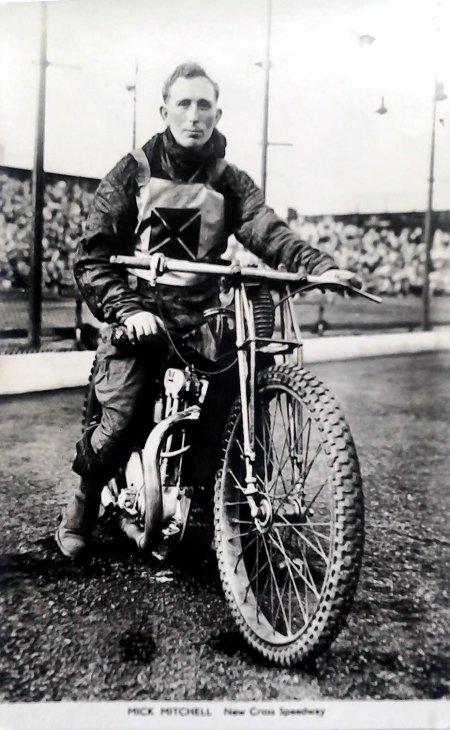
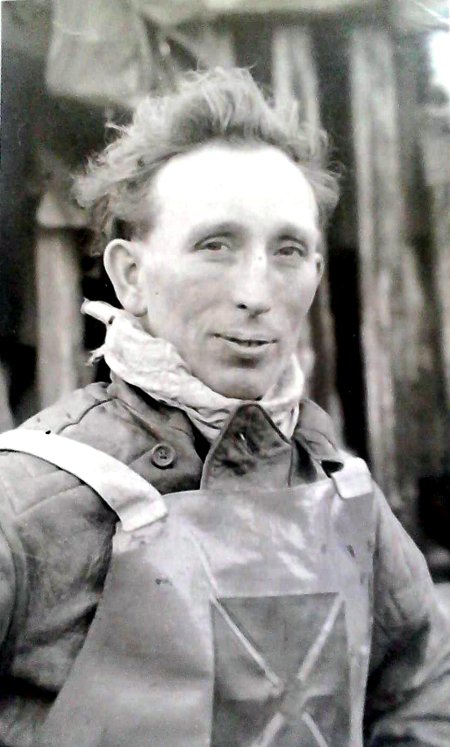
| From nearby Lee Green, the local element was supplied by garage
mechanic Mick Mitchell, who broke into speedway in 1939 when
Crystal Palace reopned in the secon division. |
| |
|
Then, in 1947, amidst much publicity New Cross signed the
Australian ‘White Ghost’ Ken le Breton, so called because of his
white leathers. He didn’t stay long at New Cross, going to second
division Newcastle with a £1,000 cheque in an exchange deal that
brought Jeff Lloyd into the Rangers’ orange and black race jacket. |
| |
| There was a roar of laughter when le Breton stepped on to the New
Cross centre green to be introduced, a week before making his
debut for the club. He was nattily dressed in a pin-stripe suit, a
bowler hat and carried a neatly rolled umbrella. |
|
|
|
Le Breton was then the sport’s supreme showman and developed riding
ability to match it. But for an untimely race track crash in
Sydney, Australia, in January 1951 which cost him his life, he
would probably have been a world champion. |
| |
| New Cross were famous for their brotherhoods. Pre-war, George
Newton was joined by his brother Ernie, and Tommy Farndon’s
brother Sid also tried his hand. And pre-war Australian rider Clem
Mitchell’s brother Lindsay also raced at New Cross in the 1950s. |
| |
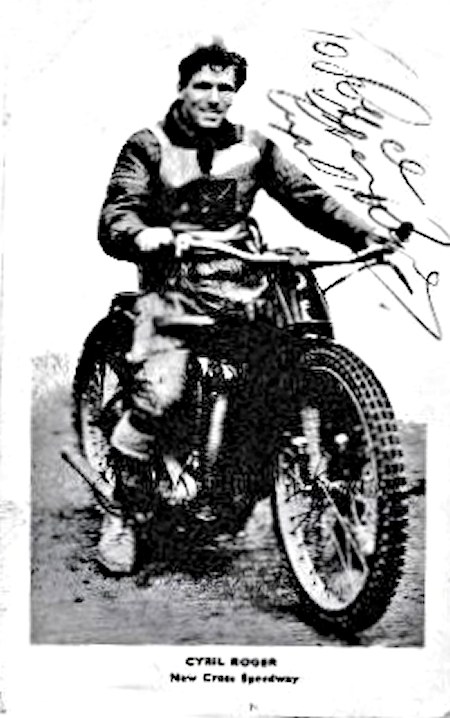
| Ray and Derek Ellis were two post-war brothers who raced for New
Cross, but the most famous brotherhood of the lot was a trio - the
first in the sport to race for the same club ib Cyril, Bert and
Bob Roger. All rode for England and became world finalists, |
| |
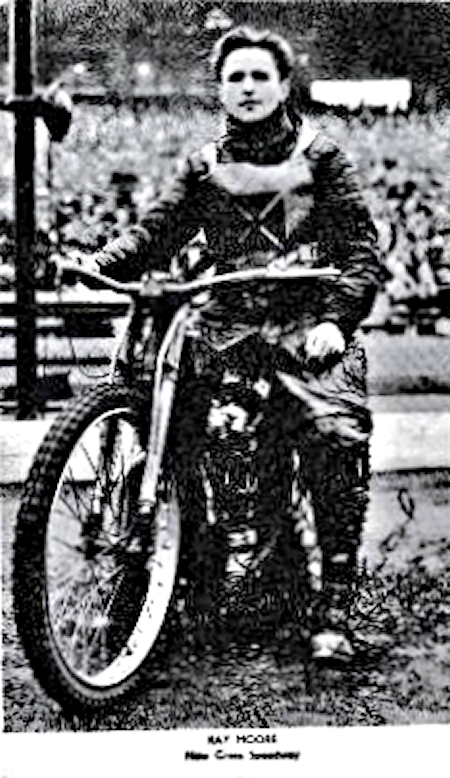
| Another with local associations was Ron Johnson’s post-war protege
Ray Moore, who joined the track as a novice after demob from the
RAF in 1946. By 1948, Moore was an England international. His
slump in form coincided with a loss of form by Johnson, who was
never the same rider after fracturing his skull in a crash at
Wimbledon in 1949. |
| |
| For years after his retirement in 1954, Moore ran a car sales
business in Albany Road, Peckham, next door to the famous ‘boxing’
pub the Thomas A’Becket where Moore was a ‘regular.’ He turned to
car racing after a fleeting 1959 speedway return for Johnnie
Hoskins at New Cross. He was killed in a car racing accident at
Aintree in 1963. |
| |
| Speedway flourished for many years, and the track was also the
scene for many international events. The decline in spectator
interest came with the sport’s change of surface for tracks from
deep cinders to slick shale. The spectacular legtrail style of
riding vanished, riders went foot-forward, and race results became
more predictable. |
| |
| The end of speedway in a big way at New Cross came on June 10,
1953, when Freddie Mockford withdrew them from the National
League. In their last match, they drew 42-42 against Bradford. |
| |
|
Johnnie Hoskins, the veteran promoter who was reputed to have
‘started it all’ at West Maitland, Australia, in 1923, later
promoted for a couple of seasons, but even he could not pull back
the crowds. Hoskins’ first New Cross promotion was on August 19,
1959. |
| |
| Hoskins relinquished his interest at the end of 1961. Speedway was
back on April 12, 1963, when promoter Wally Mawdsley entered the
team in the Provincial League, but they folded in mid-season. The
last match was on August 2 when visiting Poole won 41-37. |
| |
|
Stock cars came in 1954, the first ever British meeting was on
Good Friday, April 16. After three weeks they moved to Harringay.
There was a brief late 1960s revival. |
| |
| Greyhound racing had a longer life at New Cross. It started in
1933 and continued until 1969. Then the Greyhound Racing
Association switched its attention to nearby Catford. |
| |
| Eventually, Lewisham Council bought the land from the owners
British Rail. In March, 1974, the demolition men moved in and
knocked down the stadium prior to laying parkland. It signalled
the end of an era that for more than 40 years had been very much a
part of life for south Londoners. |
| |
| John Skinner says: My thanks to John Hyam
for providing the above info on New Cross. |
| |
| |
|
| |
| |
| Speedway Historian John Hyam has been in
touch again with some photos of New Cross riders. John's
photos follow below: - |
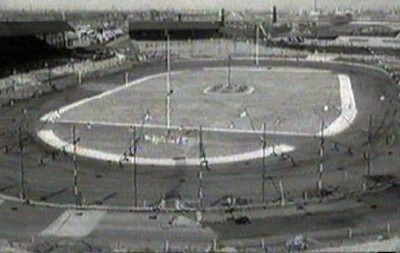
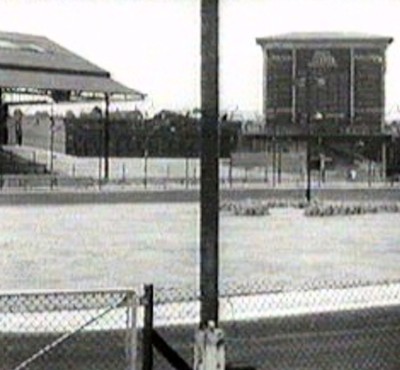
A Panoramic View of
New Cross |
| |
 |
| |
 |
| |
| A great photo of the whole track and a
not so great photo of a lamp standard! With the very tidy New
Cross stadium in the background |
| |
| |
| Ron Johnson |
| |
.jpg) |
| |
| |
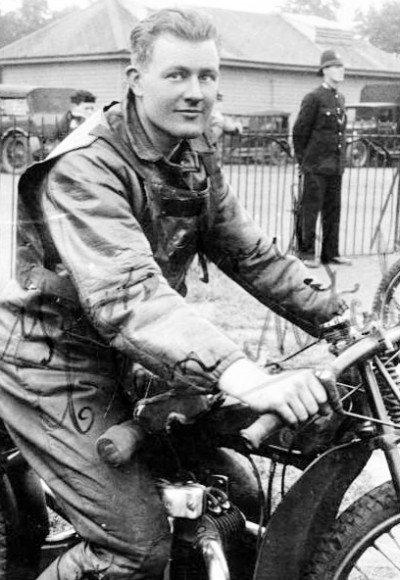
| Clem Mitchell |
| |
 |
| |
| |
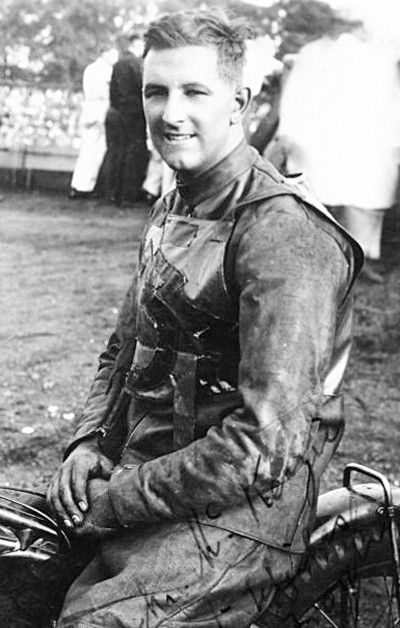
| Roger Frogley |
| |
 |
| |
| Roger Frogley, early 1930s at Crystal
Palace |
| |
| |
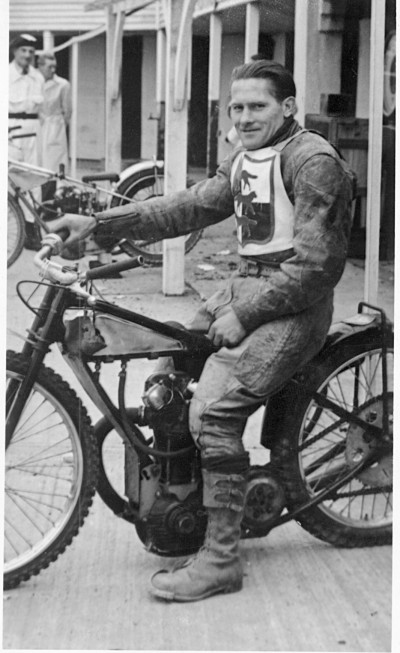
| George Newton |
| |
 |
| |
 |
| |
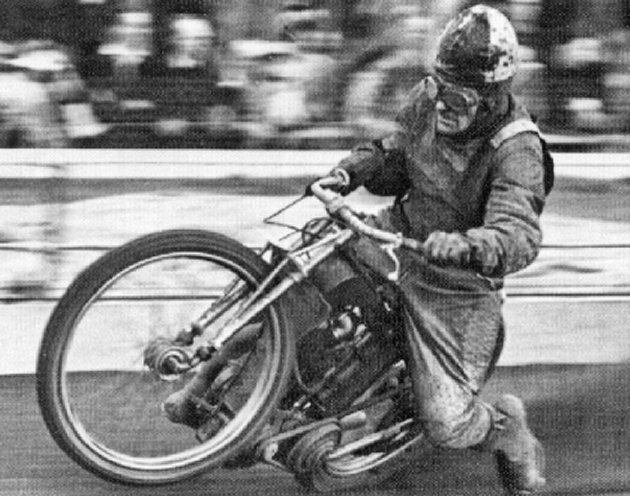
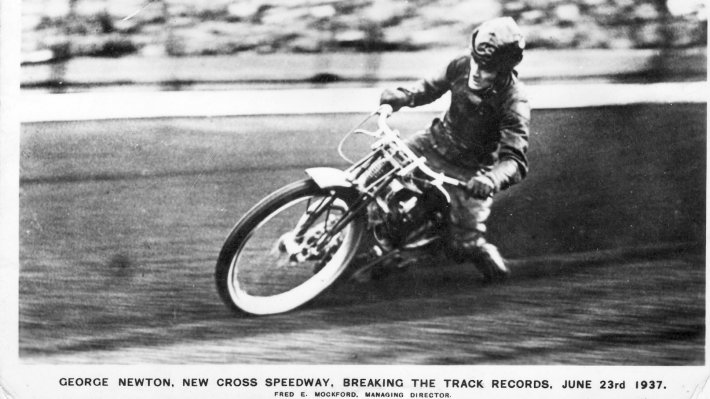
| John Skinner says: This action photograph
is one of my favourite speedway pics and I have seen many. I
am, at 62yrs, too young to have seen George ride but every action
picture I have seen of him shows him to have been a very
spectacular rider. |
| |
| |
| Jack Milne USA |
| |
 |
| |
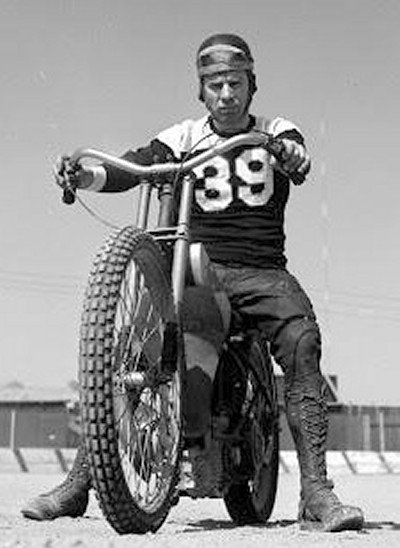
| A brilliant photo of Jack Milne, USA 1937
world champion |
| |
| |
| Crocky Rawding |
| |
 |
| |
| |
| Norman Evans 1930s |
| |
 |
| |
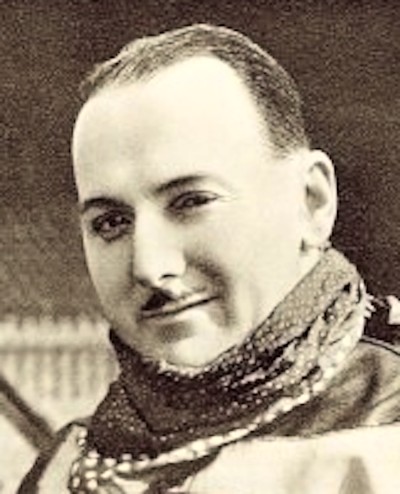
| Norman moved north to ride for Newcastle
Diamonds. The Newcastle promoter at that time was Johnnie
Hoskins who liked his riders to have nicknames. Johnnie
saddled Norman with "Pansy" Evans. Not a great nickname for
a speedway rider and shame on old Johnnie for naming Norman that
way. Norman was a great rider but not in world class. |
| |
| |
|
| |
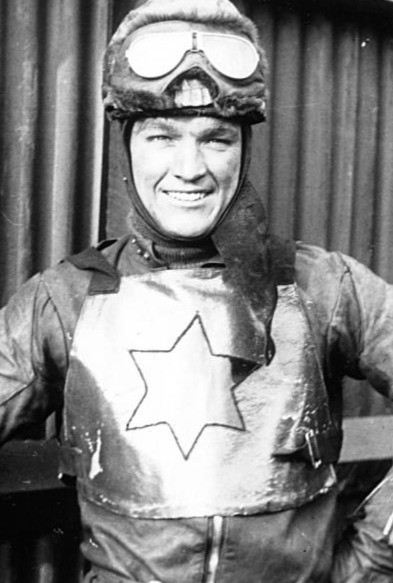
| Tom Farndon |
| |
 |
| |
| |
| Painting of Tom Farndon |
| |
| By John
Proud |
| |
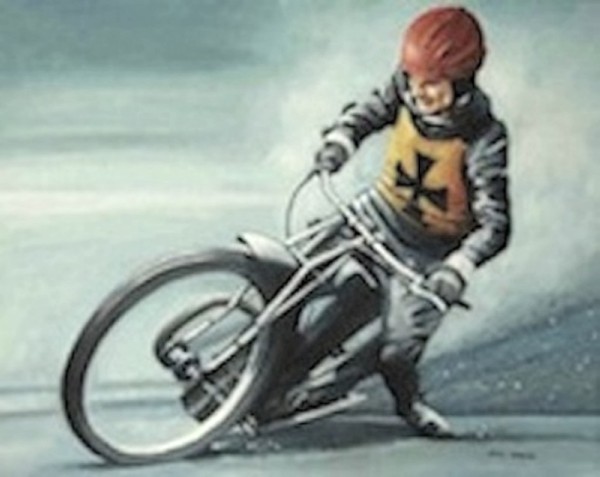 |
| |
| Tom Farndon on canvas |
| |
| |
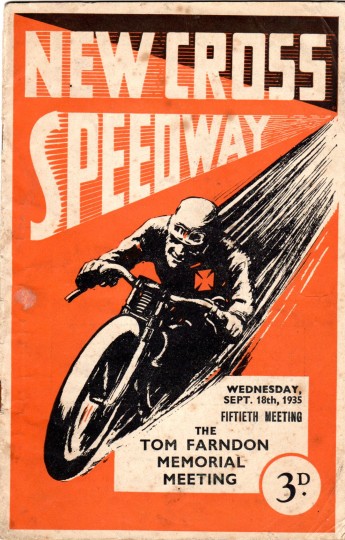
| Tom Farndon Memorial Meeting
|
| |
| 18 September 1935 |
| |
 |
| |
 |
| |
 |
| |
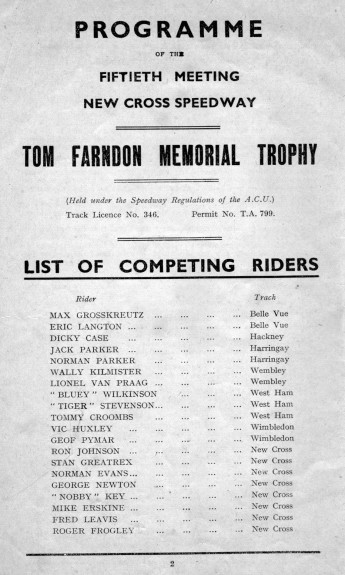
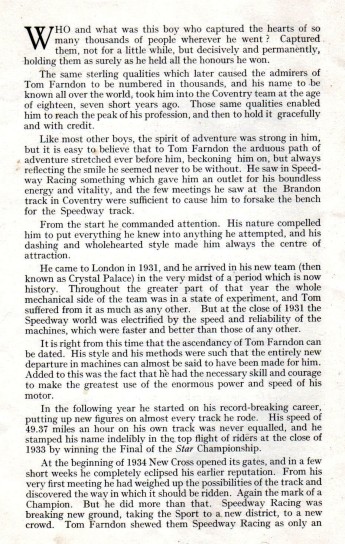
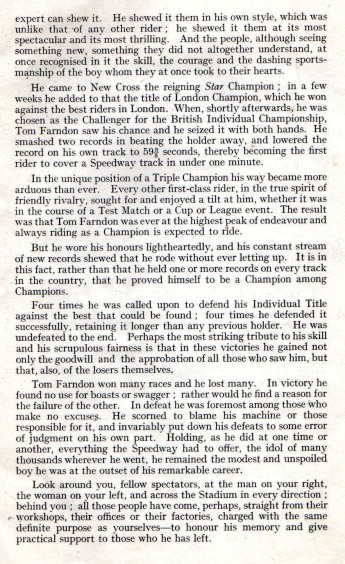
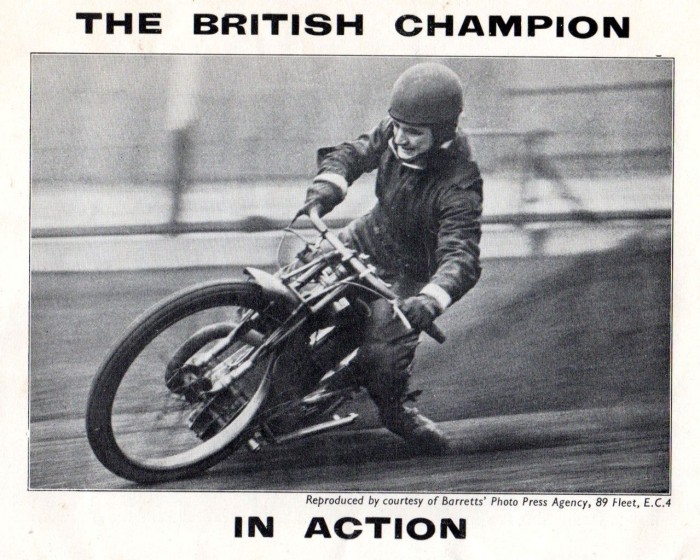
David Pipes says: I came across this New Cross programme
(shown above), a few years ago on a second hand bookstall –
The Tom Farndon Memorial Meeting on 18 Sept 1935 – held a few
weeks after Tom had died following the track crash. I
thought that you might like to include these scans in your New
Cross page. The format for this meeting was unusual in
that there were only three riders in each race, each rider had
three rides and the scoring was 2 points for a win, 1 point
for second and none for third. The highest scoring three
riders took part in the final which was won by Eric Langton
with Jack Parker second and Max Grosskreutz third.
|
| |
| |
|
| |
| |
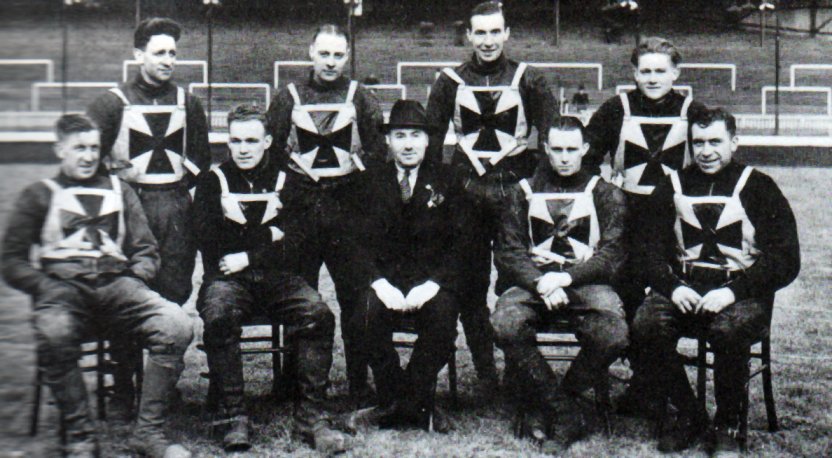
| New Cross 1934 Team |
| |
 |
| |
|
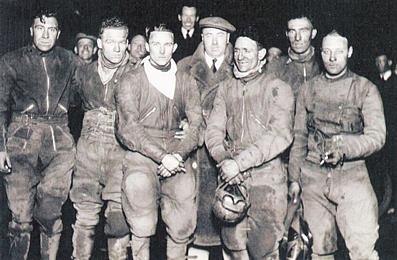
1934 Team: Harry Shepherd, Roy Dook, Stan Greatorex,
George Newton, Joe Francis, Tom Farndon, Fred Mockford, Ron Johnson and
Nobby Key
|
| |
| |
Another
1934
Line Up |
| |
 |
|
Courtesy of
Niall Strudwick
|
| |
| 1934: L to R Nobby Key, Tom Fardon, Ron Johnson, Fred
Mockford manager, Harry Shepherd, Stan Greatorex, Roy Dook) |
| |
| |
|
| |
| |
| Norman Evans 1936 |
| |
 |
| |
|
| |
| |
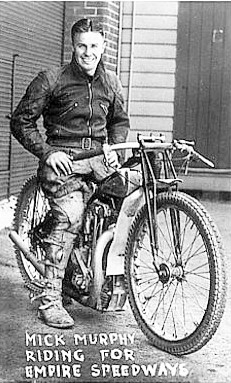
| Mick Murphy |
| |
 |
| |
|
| |
| |
|
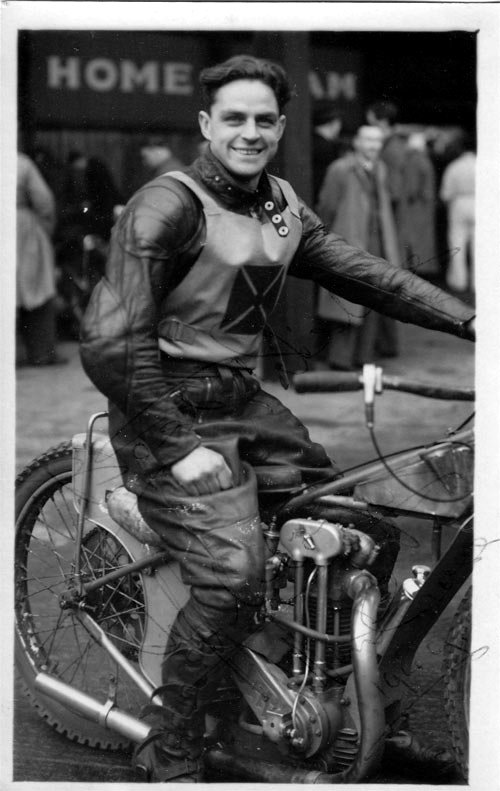
Jeff Lloyd
|
| |
 |
|
Courtesy of Kevin
|
| |
|
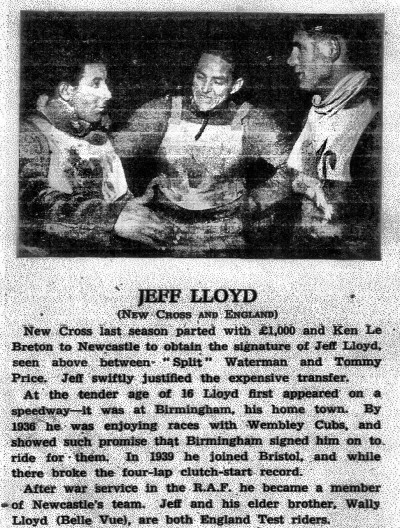
Who is the New Cross Rider
John
Mike Kemp says: New Cross rider is Jeff Lloyd
|
| |
 |
| Courtesy of Graham Gleave |
| |
| |
|
| |
| |
|
Norman Jacobs'
1930s
Photos
|
| |
 |
| |
|
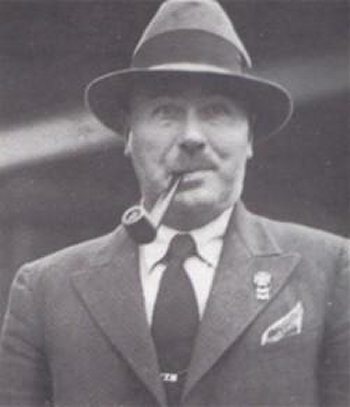
Larger than life Promoter Fred Mockford.
Fred was in charge from 1934 until 1953
|
|
|
|
|
|
|
|
|
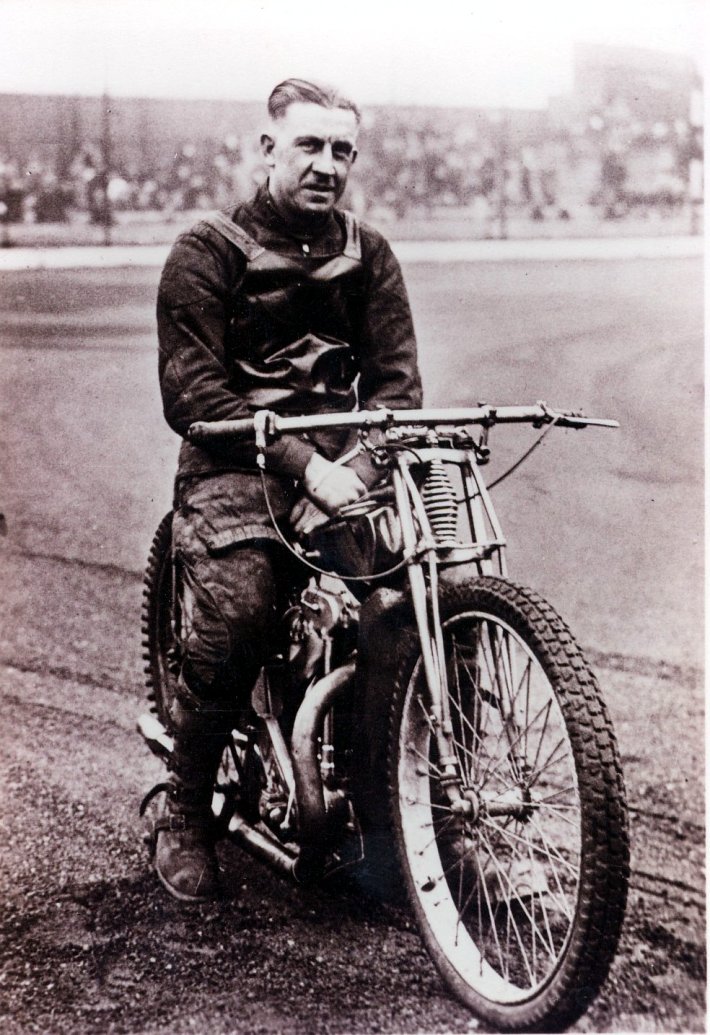
Joe Francis
|
| |
 |
| |
|
| |
| |
|
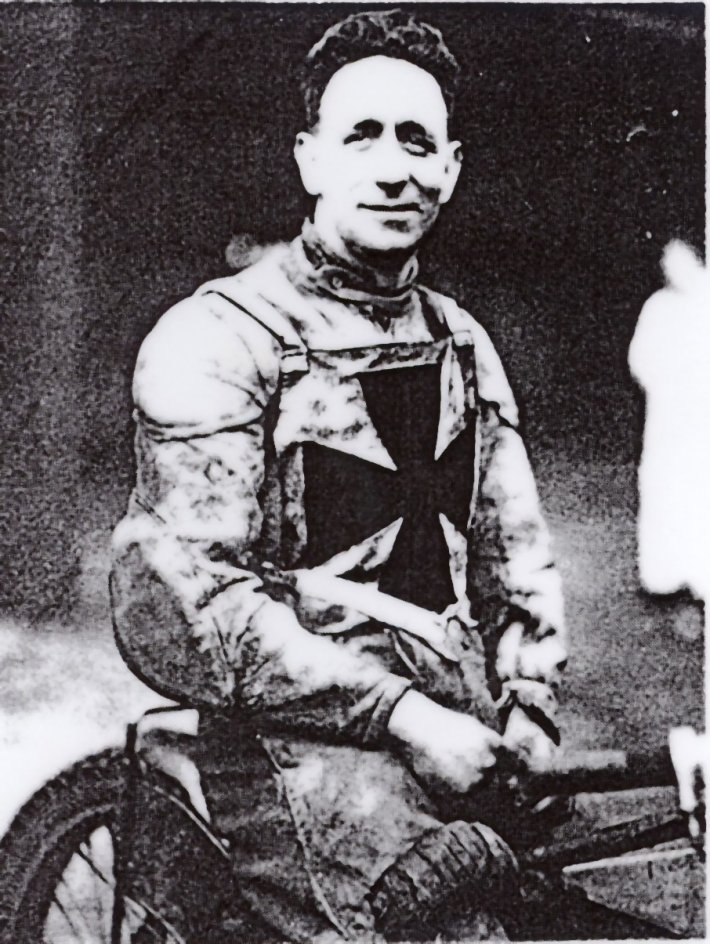
Harry Shepherd
|
| |
 |
| |
|
| |
| |
|
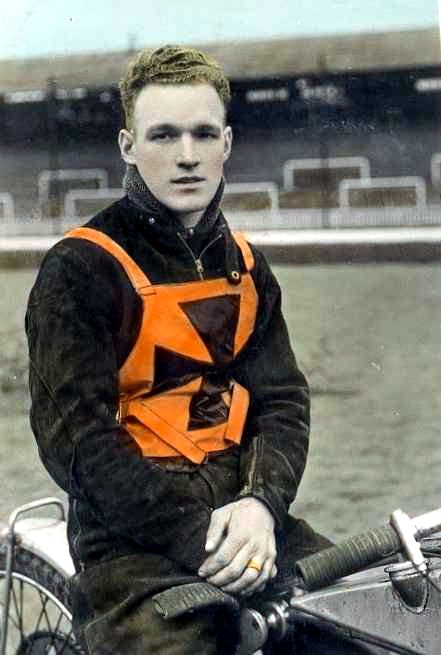
Tom Farndon
|
| |
 |
| |
|
John says: Photos like the above shot of Tom Farndon look great.
The original photo was black and white, the photographer coloured
the picture by hand |
| |
|
| |
| |
| George
Newton |
| |
 |
| |
|
|
|
| |
| |
|
Fred Pallett's
1949
Photos
|
| |
| |
|
|
| |
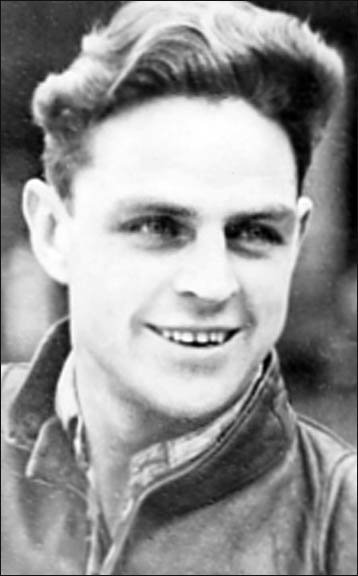
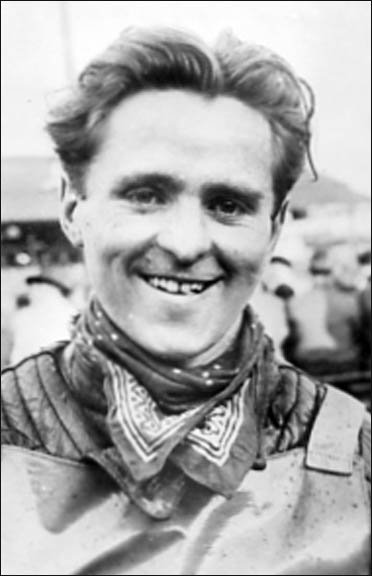
| Jeff Lloyd After His transfer to New Cross from Newcastle and Right, Ray Moore |
| |
|
| |
| |
|
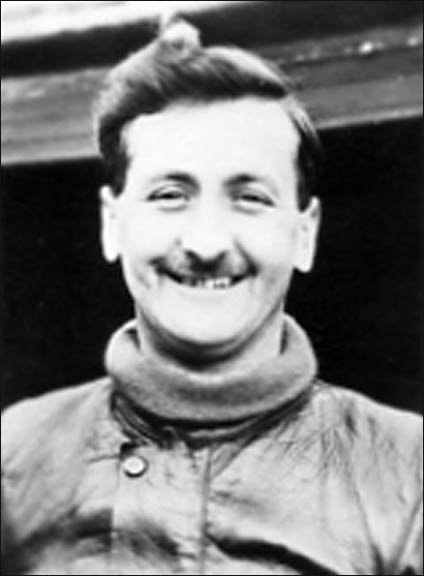
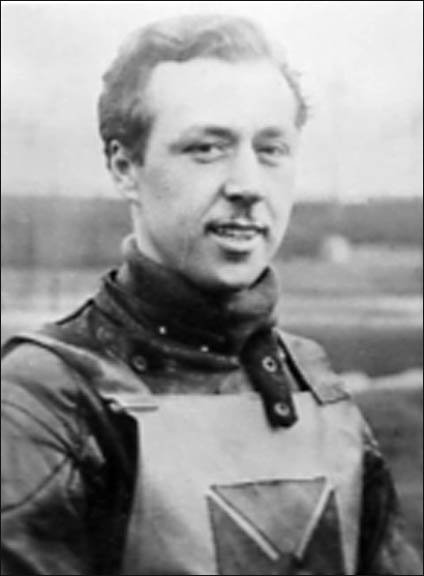
Bill Longley &
Frank Lawrence
|
| |
 |
|
|
|
| |
| |
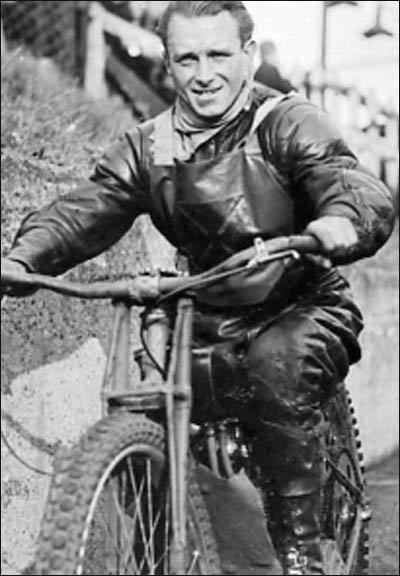
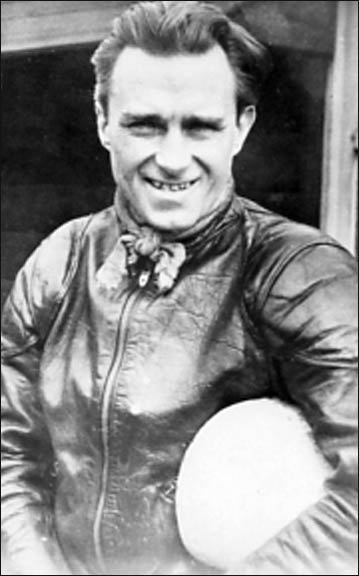
Two Photos Of
Ron Johnson |
| |
|
| |
| |
|
|
|
|
|
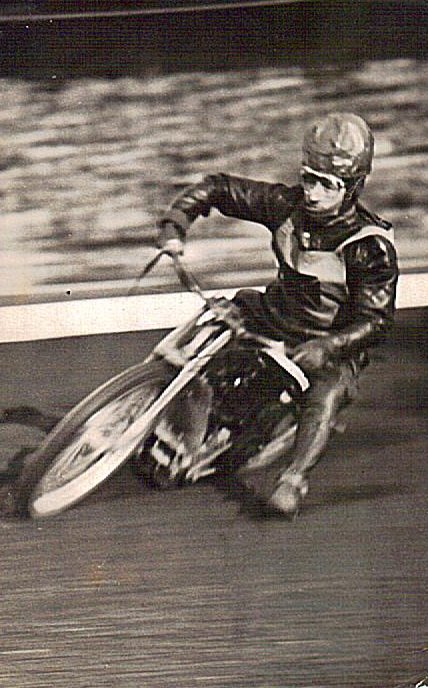
Is This
Bill Longley? |
| |
 |
| |
Tom Roe says:
I am led to believe that this photograph is Bill Longley New Cross &
Australia ?
regards,
Tom Roe formbyfalls John says: can anyone
confirm or deny that this is Bill Longley?
John
|
| |
| |
|
| |
| |
|
Montague
Joy's Badge 'n' Bars
|
| |
|
|
| |
|
This fine badge with 5 year bars belonged to Montague Joy who is sadly no
longer with us. Monty was a keen fan in the 1940's
|
| |
| |
|
| |
| |
| Mick Mitchell |
| |
| In Memory of Eileen Watson |
| |
 |
|
|
|
|
| Mick Mitchell |
| |
 |
| |
| |
|
| |
| |
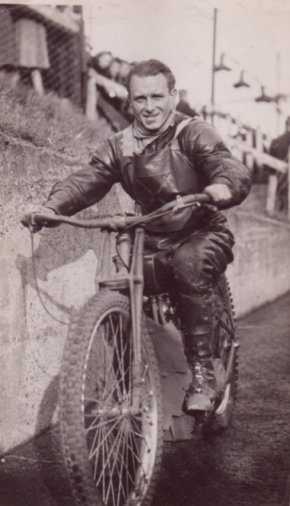
| New Cross Riders
1940s |
| |
 |
|
Courtesy John Hunter via Dave Rowland |
| |
|
Bob Andrews says: This is Ron Johnson coming into the pits
at New Cross 1947-49 |
| |
| |
|
| |
| |
| Phil Small's Photographs |
| |
 |
| |
 |
| |
 |
| |
|
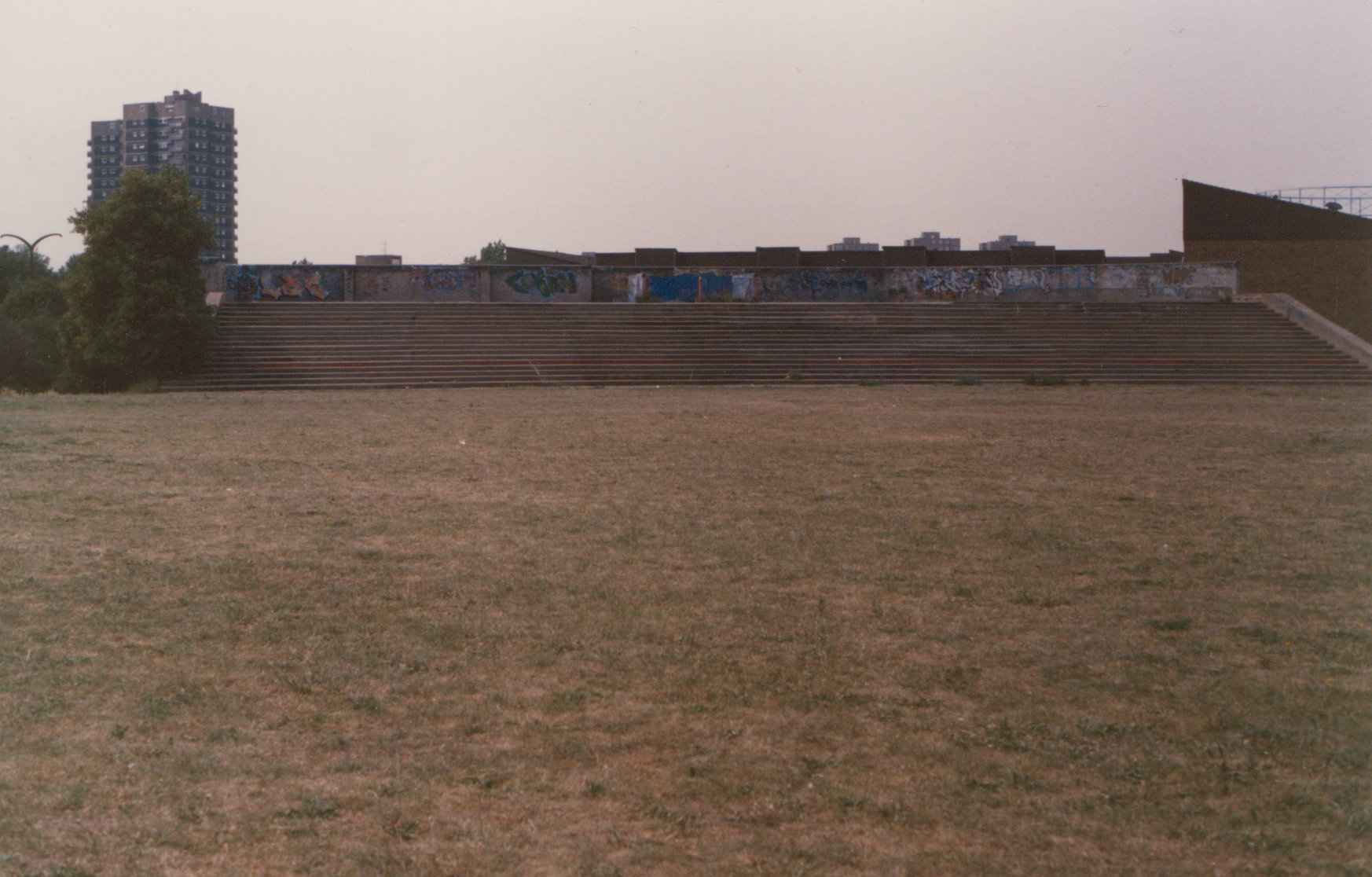
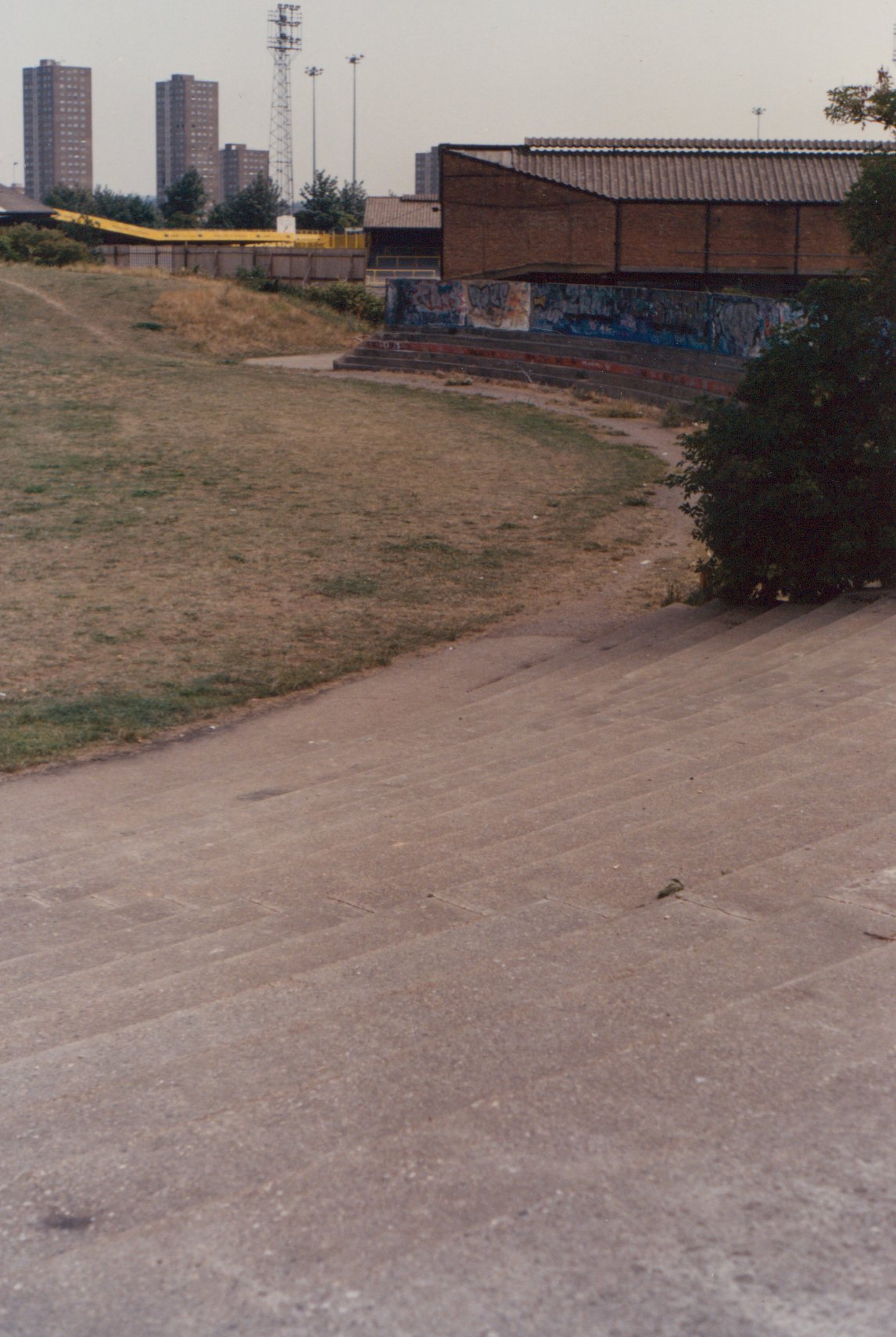
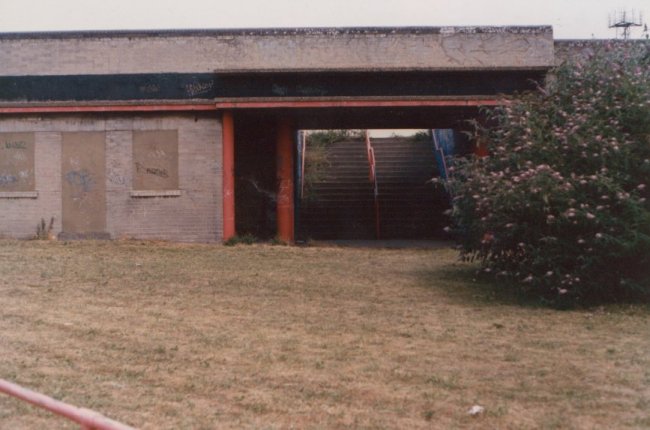
Views of New Cross taken by my friend Phil Small. Speedway ceased in 1963
and the stadium closed down in 1969
|
| |
|
|
|
| |
| |
| New Cross
Badge |
| |
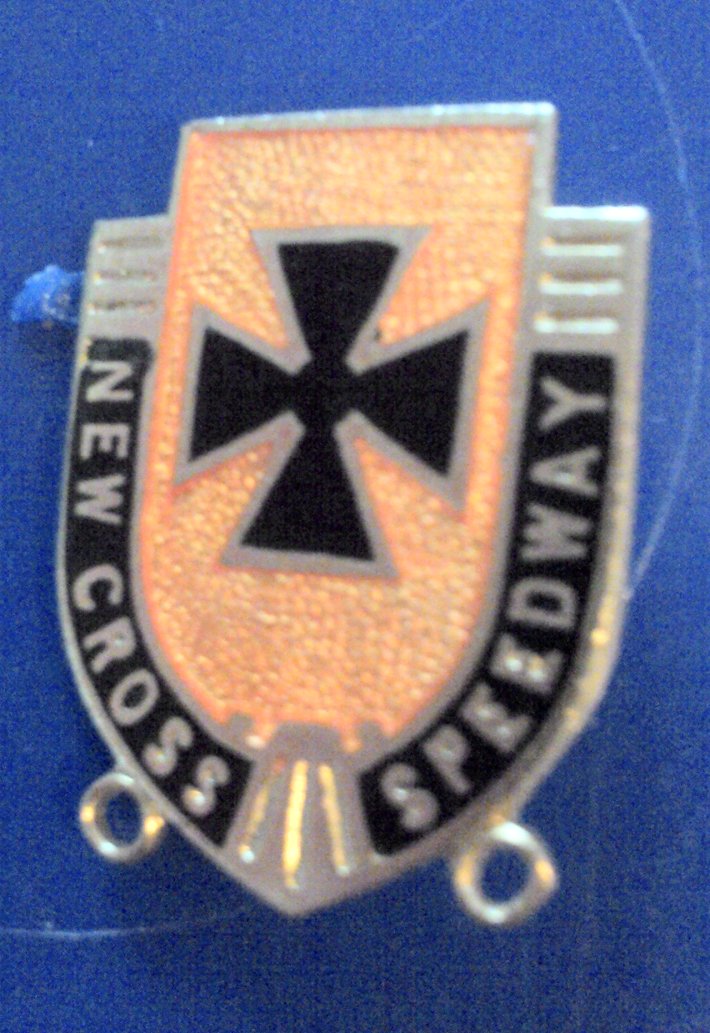 |
| Scan from Russell Earle |
| |
|
| |
| |
| Fred Leavis |
| |
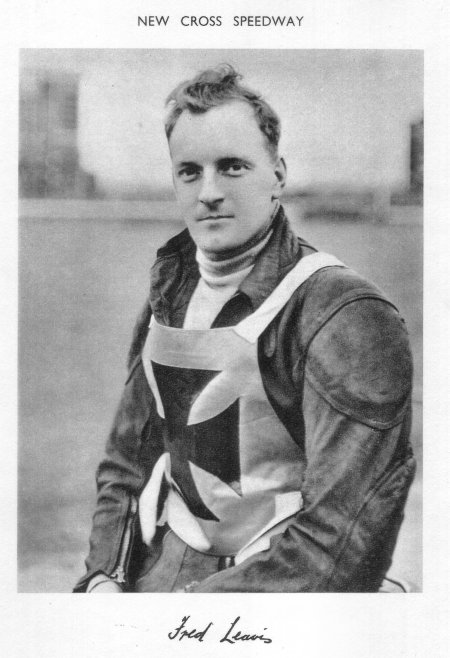 |
| Courtesy of Jim Henry |
| |
|
| |
| |
|
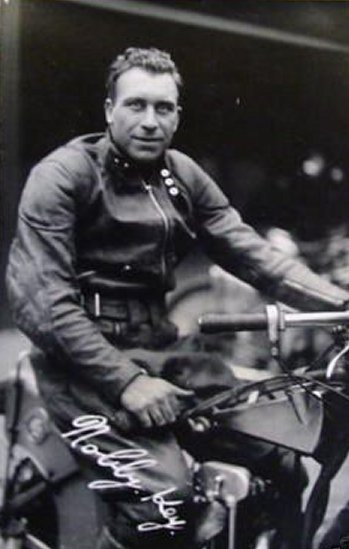
Nobby Key
|
| |
 |
| |
| |
|
| |
| |
England At
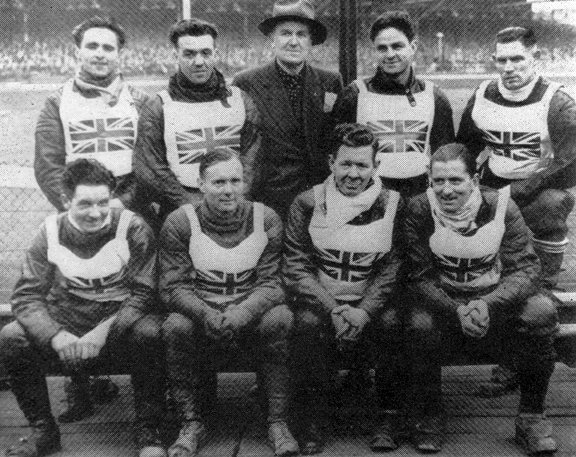
New Cross 1948 |
| |
 |
| |
| John says:
Can you name the riders and say what year it is?
John |
| Dave Beecroft says: I have had a
look at the England team needing details. I am afraid I don't know the year
but I know all but two of the riders, viz; Back row - Unknown, Dent Oliver,
Unknown, Tommy Price; Front row - Split Waterman, Alec Statham, Jack Parker
and Norman Parker. I am sure many others knew this but it's a start |
| Col Greenwell says: Could that be Jeff Lloyd next to Tommy
Price.?....The suit looks like Alec Jackson. |
| John Hyam says: The test team photo is 1948 at New Cross: first
unknown rider is Ray Moore, the other further along the line is Jeff Lloyd. |
| |
|
| |
| |
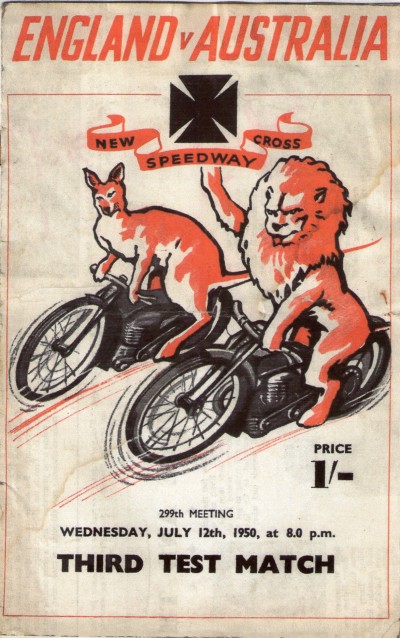
| England v Australia
1950 |
| |
 |
| |
| |
|
| |
| |
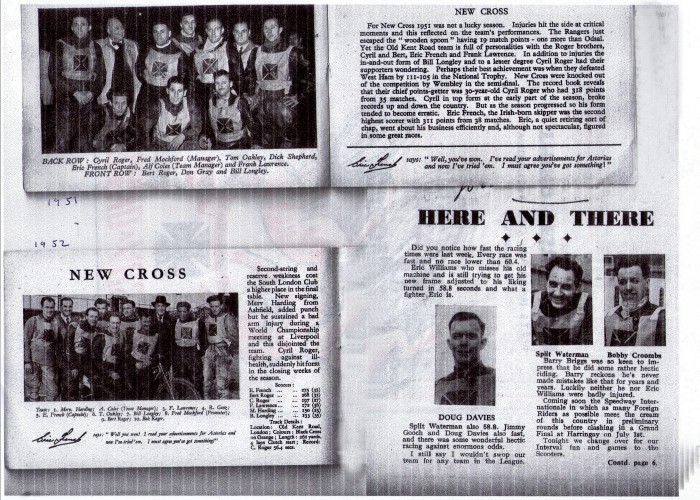
New Cross
1951 & 1952 |
| |
 |
| |
| |
|
| |
| |
|
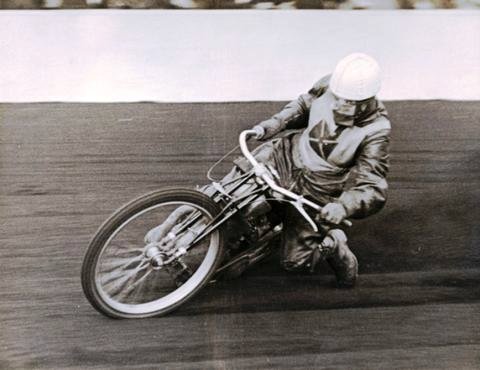
George Newton
|
| |
 |
| |
| Send me an email if you can name this rider
John |
|
| Hi John, The 'unknown' New Cross rider on your 'defunct tracks' site is in fact my
late mothers favourite: George Newton. The photo is also on the front
cover of Norman Jacobs book 'Out of the Frying Pan' the story of New Cross
Speedway. Regards, Jim |
| |
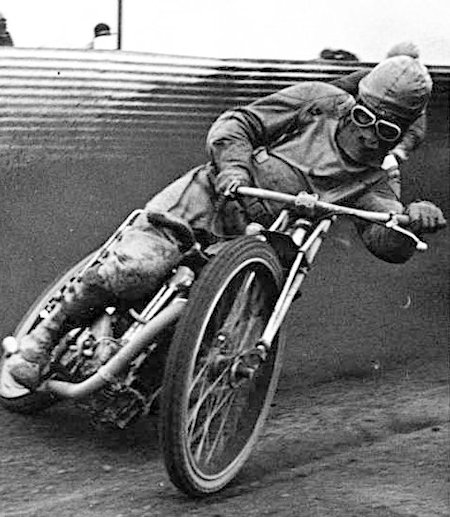
| John says: Thanks Jim, I have seen a couple of photo's of George and both show
him to have been very spectacular. Here are the other 2 photos of George: |
| |
 |
| |
|
|
| |
|
This has to be one of the best action shots you are ever
likely to see! I am becoming a George Newton fan without ever seeing him
race!
|
| |
 |
|
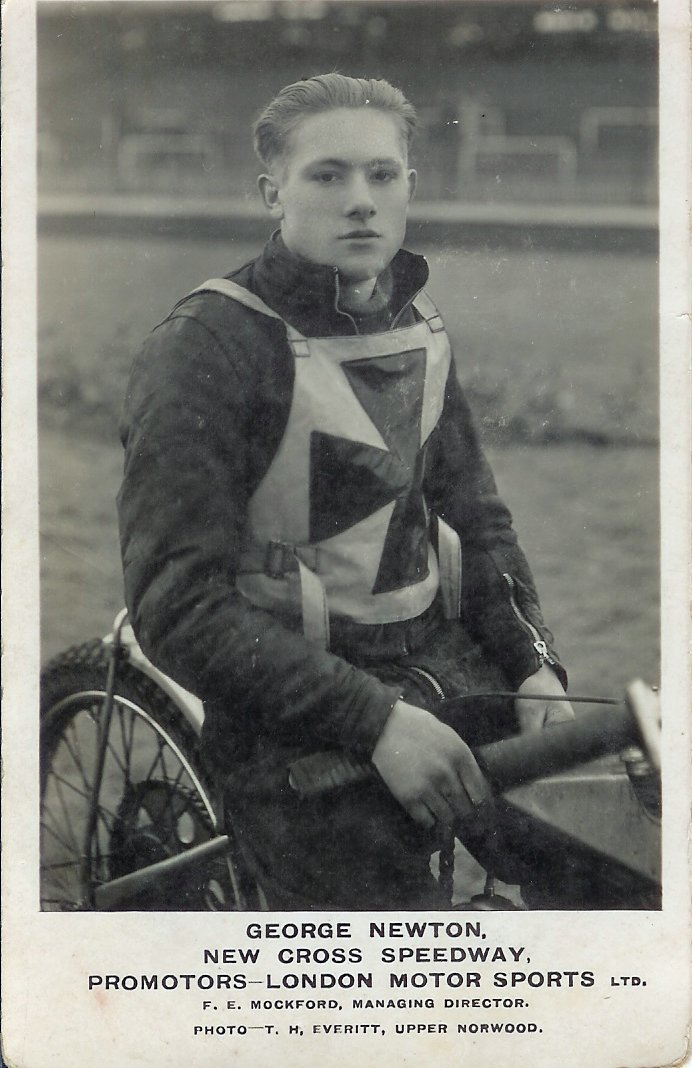
Photo Courtesy of Alan Goldsmith
|
| |
| Alan Goldsmith says: Dear John, Many thanks
for your e-mail. I am attaching the picture of George Newton (see above),
which, I am sorry to say, is the only surviving picture from my days as a
fan/reporter. This particular card was with me through my days as a
national service soldier in Trieste (1949-51) so it's not in bad condition
considering all things. Incidentally, my time in Trieste was spent with
the Forces Broadcasting Service and included doing commentaries on a
couple of speedway meetings at the San Sabba (Italy) stadium where one of
the stars was a German rider called Fritz Dirtl. He did appear briefly in
the UK and was last seen at Harringay where he and his bike
performed involuntary cartwheels down the back straight. My abiding memory
of George Newton is a night at New Cross in 1951 when, having been a
reserve during a match against West Ham, he won the reserves' scratch race
and qualified for the first heat of the Millwall scratch race winning
that, too, he qualified for the final which after a lap or so became a
two-man race between Eric Chitty and George. Eric, the archetypal white
liner, defended his lead until George, with the left end of his handlebars
almost in the dirt, overtook him at the pit bend on the inside!
The place nearly exploded. Sorry to ramble on, but at my age
Memory Lane is such a seductive place. Thank you again for your website.
With best wishes, Alan Goldsmith. |
| |
John says: Hi Alan, This website is the ideal place for trips
down memory lane. Your memories of George and the San Sabba stadium
are very welcome. I have heard of San Sabba as a Nazi prisoner of
war camp but didn't realise that after the war speedway took place there.
fascinating stuff.
As I have already said, I am too young to have seen George Newton
race but from the action shots of him that I have seen he must
have been great to watch |
John Hyam says: After the war
Newton made a surprise comeback, after a benefit meeting was
arranged for him in 1947 as he was still suffering from
illness. He returned to the New Cross team in 1948 as they won
the Championship for the second time. Further surgery at the
end of 1948 was needed and it was assumed that Newton would
retire but in 1949 he joined the Fleetwood Flyers in the
National League Division Two where he recorded eight maximum
scores in fifty appearances.
|
| |
| |
|
| |
| |
|
More New Cross Memories
|
| |
|
Bill Killick says: I was a Fan up until the time I went into
National Service 1951...which brings me to Alan Goldsmith...I was
stationed in Trieste, but must have just missed him...I was at Betfor
Signals Donadoni, with Trans and Rec at Rossetti Barracks. I used to have
the British Broadcasting on and the American Forces Network all through
the long nights at Rossetti. Tell him thanks for all the pleasure that
they gave us as we eased our way through our Service. Oh and I also worked
at New Cross dogs in the 60's as an Electrician. Dogs and Stock cars. I
was there when we won the World Cup so 66 it must have been. Miss the
Speedway though, Boy all those Cinders and Castrol R..and Singing Marching
Along together, as the St Johns men and women marched out lol Great
days...Had a Gas rattle early on and a Black and orange scarf.... thanks
for the memories ..Geoff Pymar had the widest handlebars I have ever seen
lol Bill Killick |
| |
| |
|
| |
| |
| Harold McNaughton
1951 |
| |
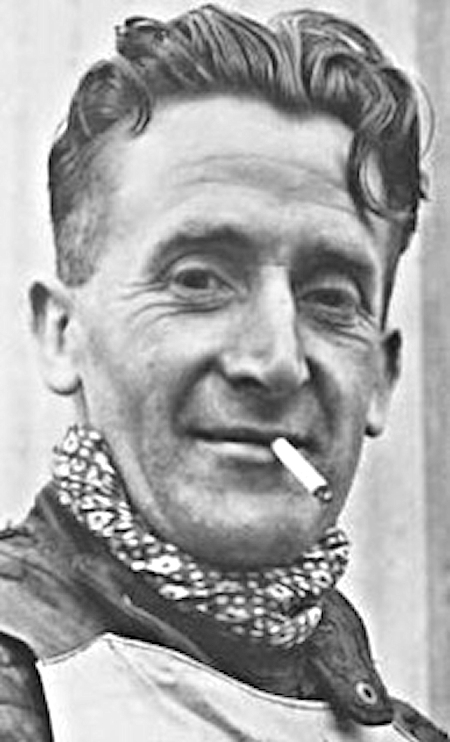 |
| Courtesy of John Hyam |
| |
|
| |
| |
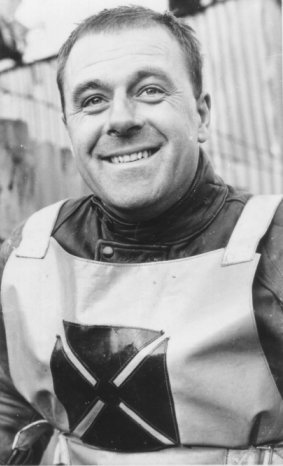
| Eric Williams |
| |
 |
|
|
|
Eric Williams photo from Mike Kemp
|
| |
| |
|
| |
| |
|
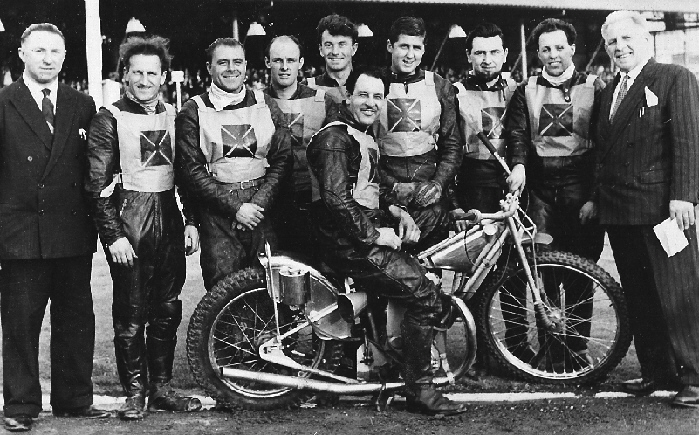
New Cross
1960
|
| |
 |
| |
|
Bob Andrew says: Hi John. Enjoying
looking at the defunct Teams. The New Cross team is Manager? then Jimmy
Gooch, Eric Williams, Leo McCauliffe, Reg Luckhust, Barry Briggs, Tommy
Sweetman, Bobby Croombs, And Johnnie Hoskins. |
|
|
|
John Edwards says:
Hi John. Looking at your
excellent site set me to digging out the old programmes I have
from the brief period (1959-1961) when I watched speedway at New
Cross. And, according to the programme, the man in the suit on
the left in the 1960 team picture is Stan Hinckley
(co-promoter). I guess the programme writers should know, though
I wouldn't put anything past Johnnie Hoskins! |
|
|
| |
|
| |
| |
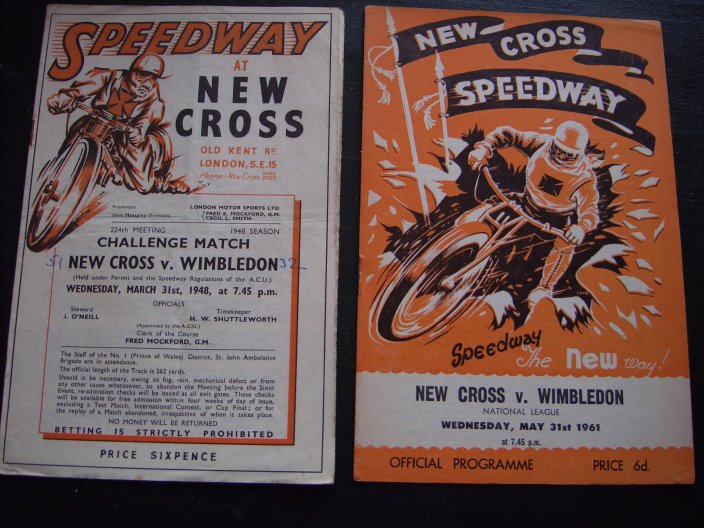
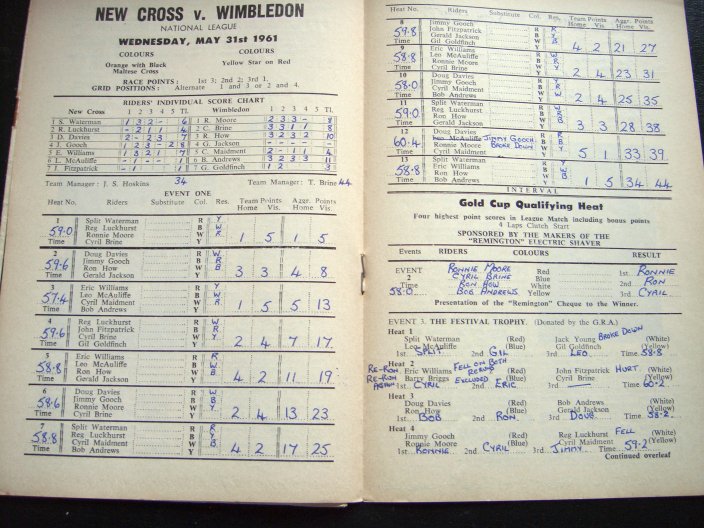
London
Rivals
New Cross v
Wimbledon 1961 |
| |
 |
| |
 |
| |
|
| |
| |
|
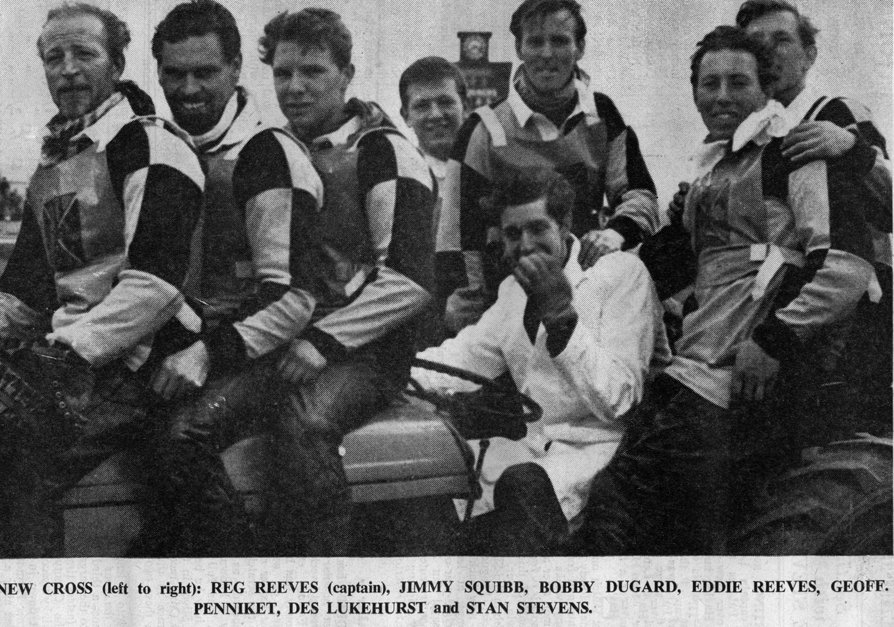
New Cross 1963
|
| |
 |
| |
| |
|
| |
| |
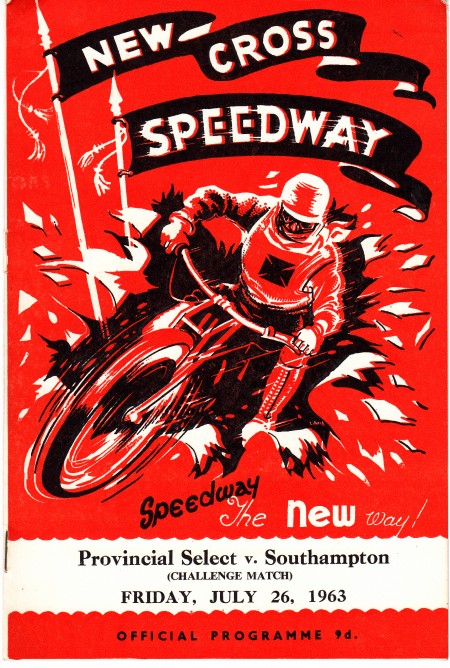
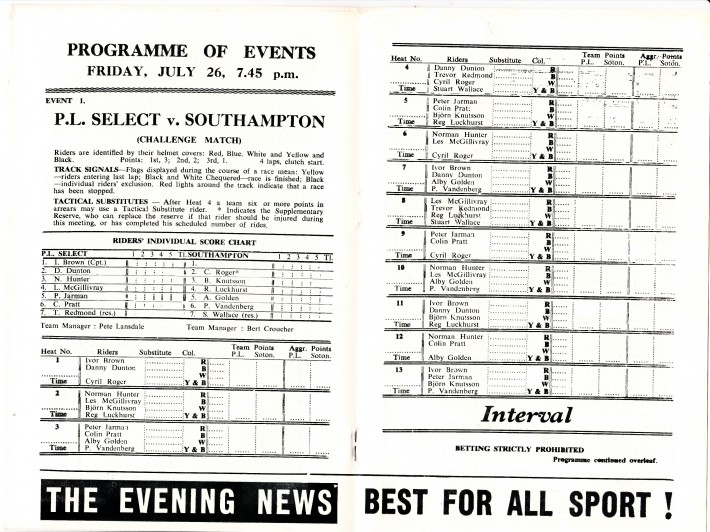
| Provincial Select v Southampton |
| |
| At New Cross |
| |
| 26th July 1963 |
| |
 |
| Courtesy Of Wattie Dunlop |
| |
 |
| Courtesy Of Wattie Dunlop |
| |
|
|
|
| |
| |
|
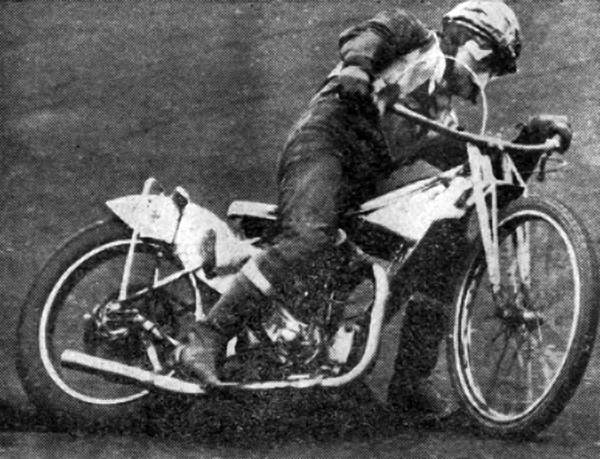
Bobby Dugard
|
| |
 |
| |
| |
|
| |
| |
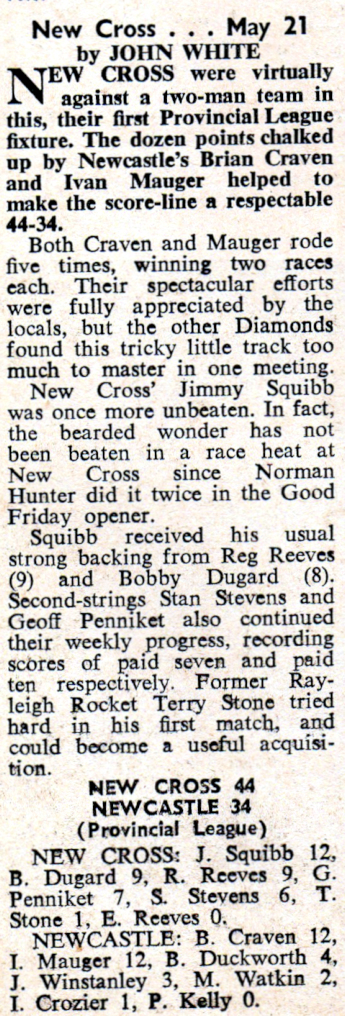
| New Cross v Newcastle Provincial League
44-34 |
| |
| 21st May 1963 |
 |
| Courtesy of John Spoor |
| |
| In 1963 a visit from a Newcastle team
meant a visit of two of the Provincial Leagues best riders, big
scoring duo Brian Craven and Ivan Mauger whom were good enough to
trouble the home teams star men! |
| |
| |
|
| |
| |
|
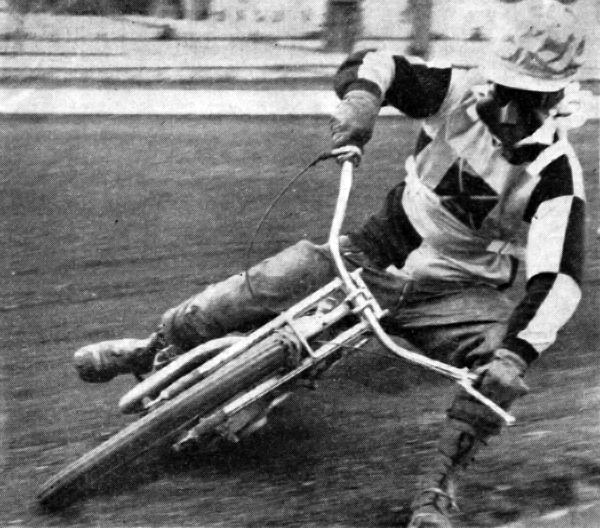
Des Lukehurst
|
| |
 |
| |
|
| |
| |
|
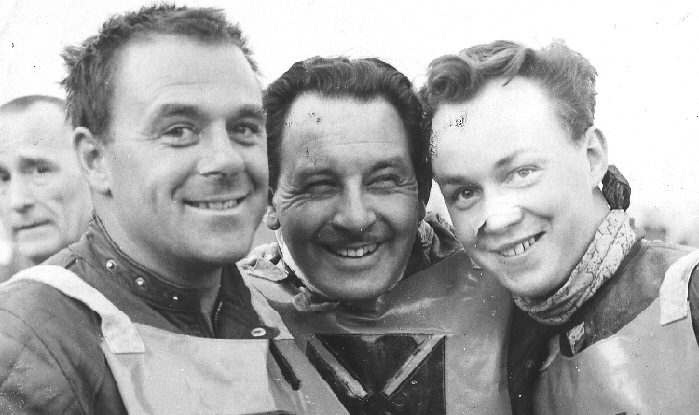
Eric Williams Split Waterman &
A Carlsson
|
| |
 |
| |
|
| |
| |
|
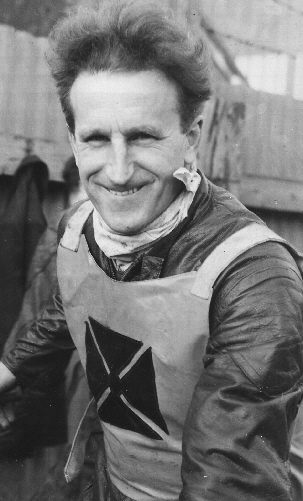
Jimmy Gooch
|
| |
 |
| |
|
| |
| |
|
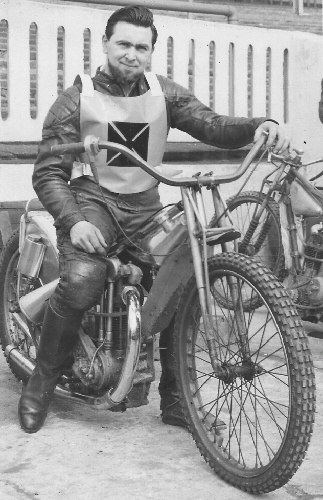
Tommy Sweetman
|
| |
 |
| |
| |
|
| |
| |
|
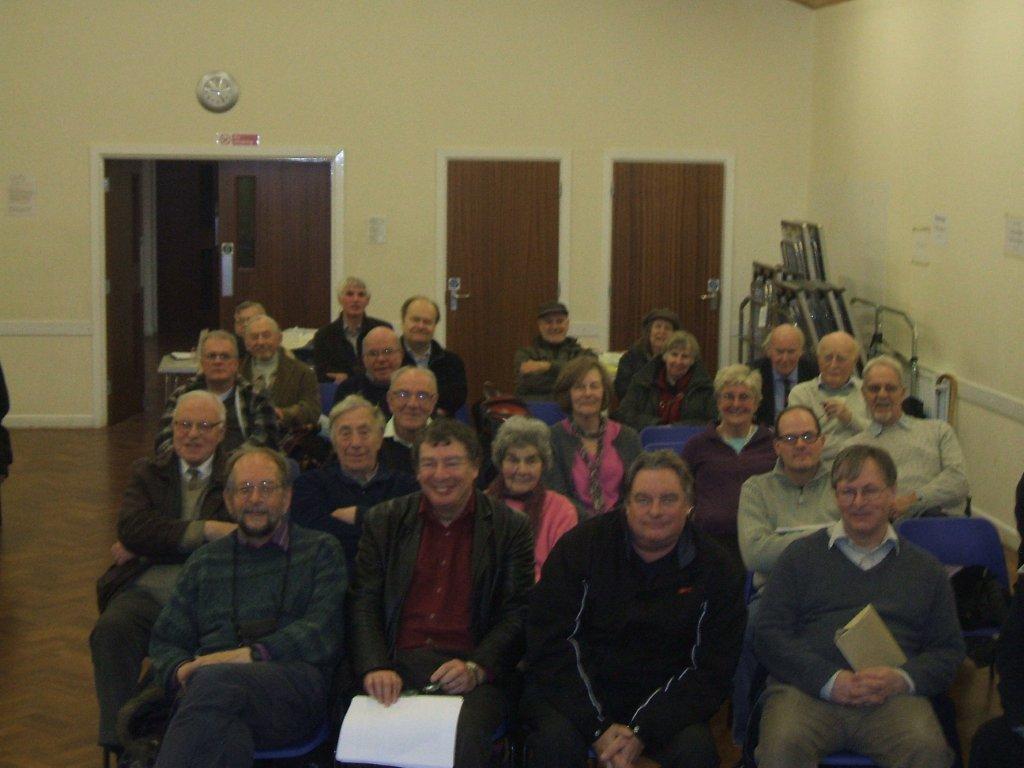
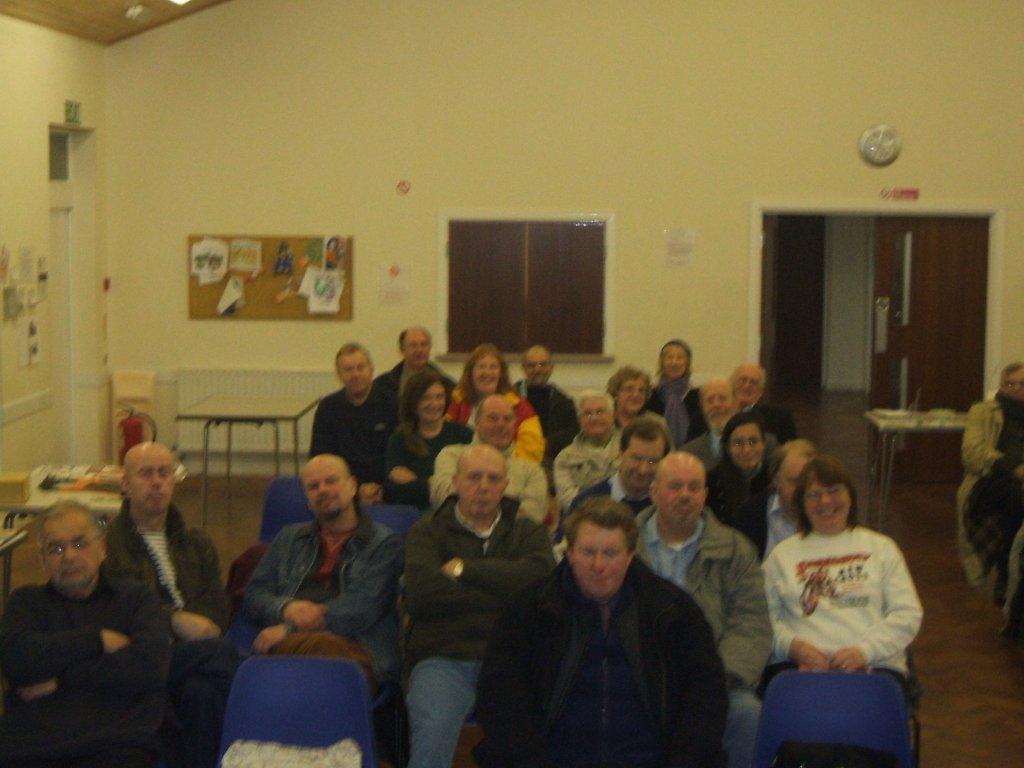
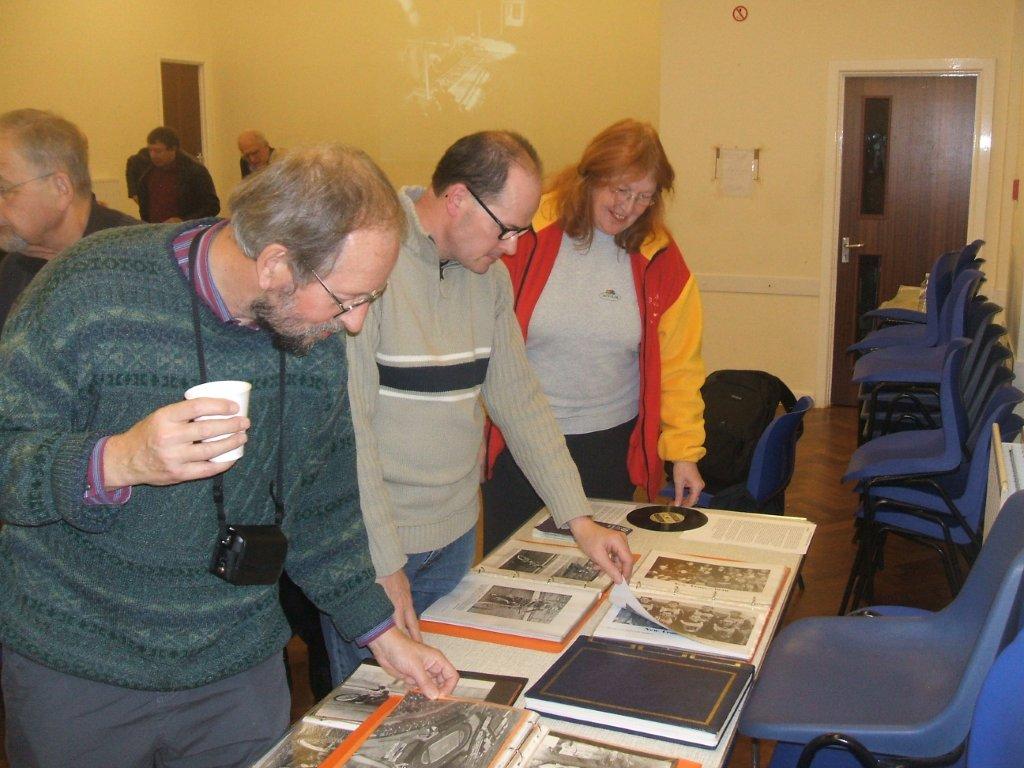
2010 New Cross Talk-In
|
| |
 |
| |
 |
| |
 |
| |
|
John says: A healthy turnout for a talk by author and speedway historian
Norman Jacobs. Norman has contributed to my website on a few occasions, thank you Norman
|
| |
| |
| |
| If you can scan any pictures, programmes or badges send
me an email John |
| |
|
| The contents of the site are © and should not be
reproduced elsewhere for financial gain. The contributors to this site
gave the pictures and information on that understanding. If anyone has
any issue or objections to any items on the site please
e-mail
and I will amend or remove the item. Where possible credit
has been given to the owner of each item. |